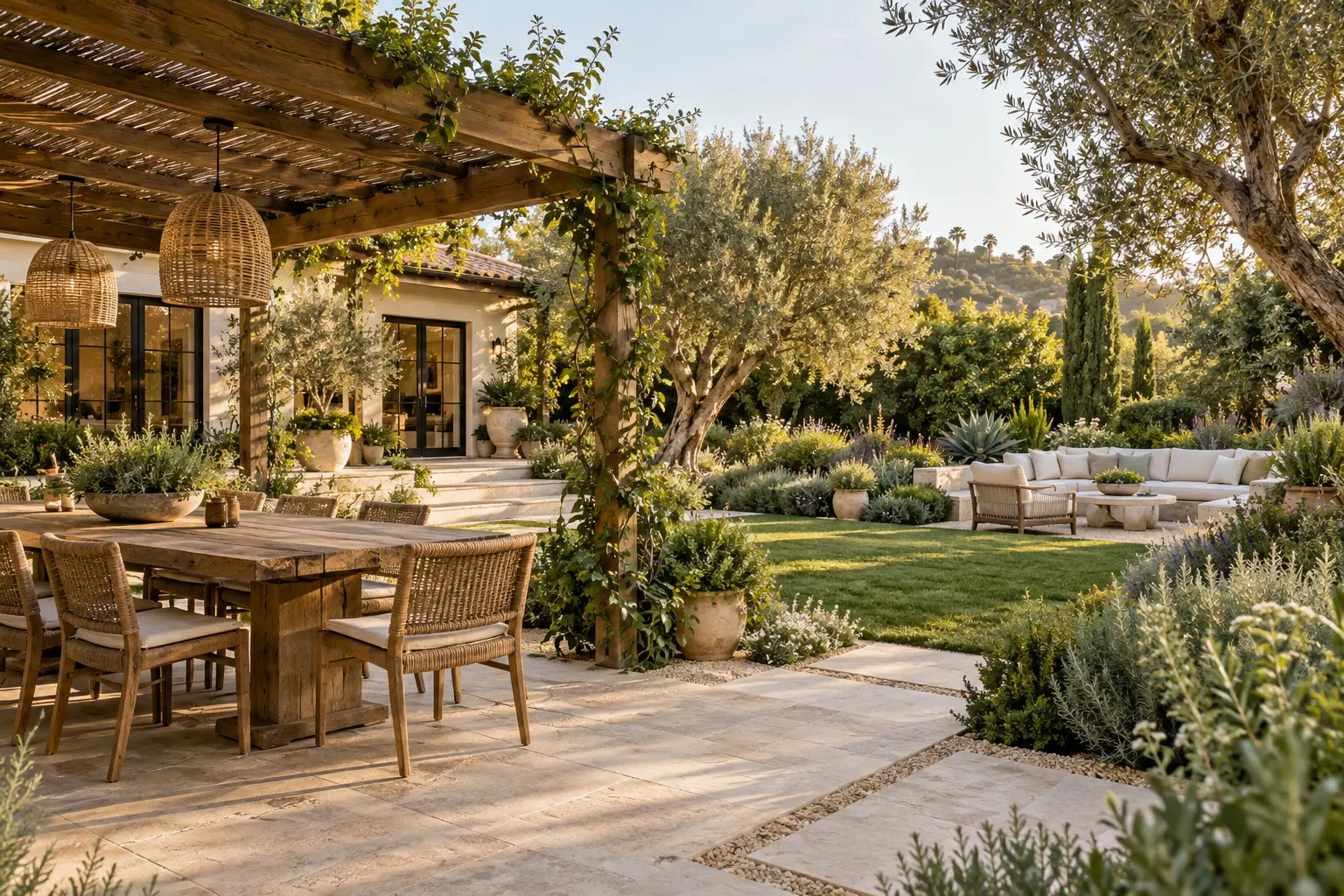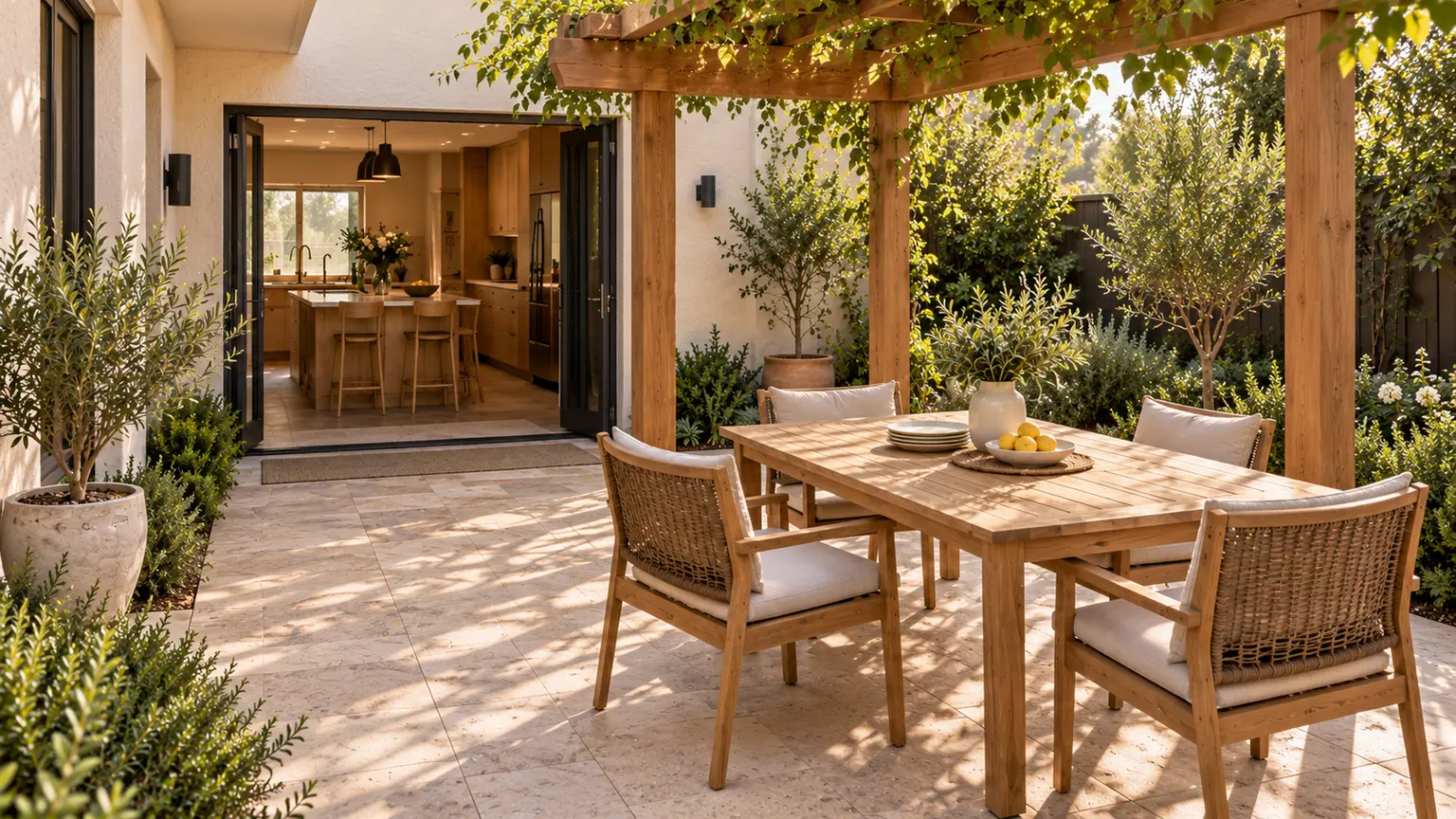
The table is in the shade. The person sitting at it is squinting.
That is an easy detail to miss when choosing a pergola from a photograph. You see a covered dining area, beautiful furniture and somewhere you would like to spend an evening. You cannot see whether the shadow will reach your chair when dinner arrives.
Before choosing a shade structure, identify the seats you want to use, the hours you need them and the seasons that matter. Then record where direct sun actually falls. The aim is not to cover the largest patch of paving. It is to make the part of the patio you use work at the right time.
Planning observations to turn into a site-specific shade brief.
Watch the story
Loading the film connects to YouTube. Google’s privacy policy applies.
Give the shade a job
“We want a shaded patio” leaves a lot undecided. Breakfast outside and dinner outside are different requests. So are an occasional lunch for two and a table used by six people every evening.
Write down your priority in a sentence: “We want to eat outside after work, with all four dining seats out of direct sun through the meal.” Add the months and approximate hours you have in mind. Those are requirements to investigate, not a promise that one particular structure can deliver them.
Imagine a four-seat table that looks well shaded at lunchtime. At dinner, two chairs catch direct sun. Moving everyone to the other side is possible for a couple, but it does not solve dinner for four. In this example, the question is not whether the patio has shade. It is whether the shade reaches the occupied seats.
That smaller, more specific question is much easier to investigate.
Follow the shadow through a meal
Leave the table and chairs in their normal positions for the first check. Give each seat a simple name, such as house side, garden side, near end and far end. This prevents “the table was shaded” from hiding a problem at one chair.
Take a photograph from the same viewpoint near the beginning, middle and end of the period you care about. Record the date, local time and weather. Briefly check the view from each seat as well: shade on the paving is not the same observation as direct sun at your face or shoulders.
Use this small record in a notebook or phone note:
| Observation | What to record |
|---|---|
| When | Date, local time and weather |
| Where | Seat name and photograph reference |
| Direct sun | Where it reaches the seated person and table |
| Shade edge | Where the edge falls relative to that chair |
| Change to investigate | Move the seat, adjust existing shade, or ask about another approach |
If cloud hides the shadow edge, mark that observation as inconclusive. Do not turn a cloudy afternoon into evidence that a proposed cover will work. This is a brief observation exercise, not a reason to stay outside in uncomfortable heat.
Now look across the records. Is one seat exposed throughout? Does the problem arrive late in the meal? Does the shaded area move away from the table? Each pattern gives you a different question to take to a designer.
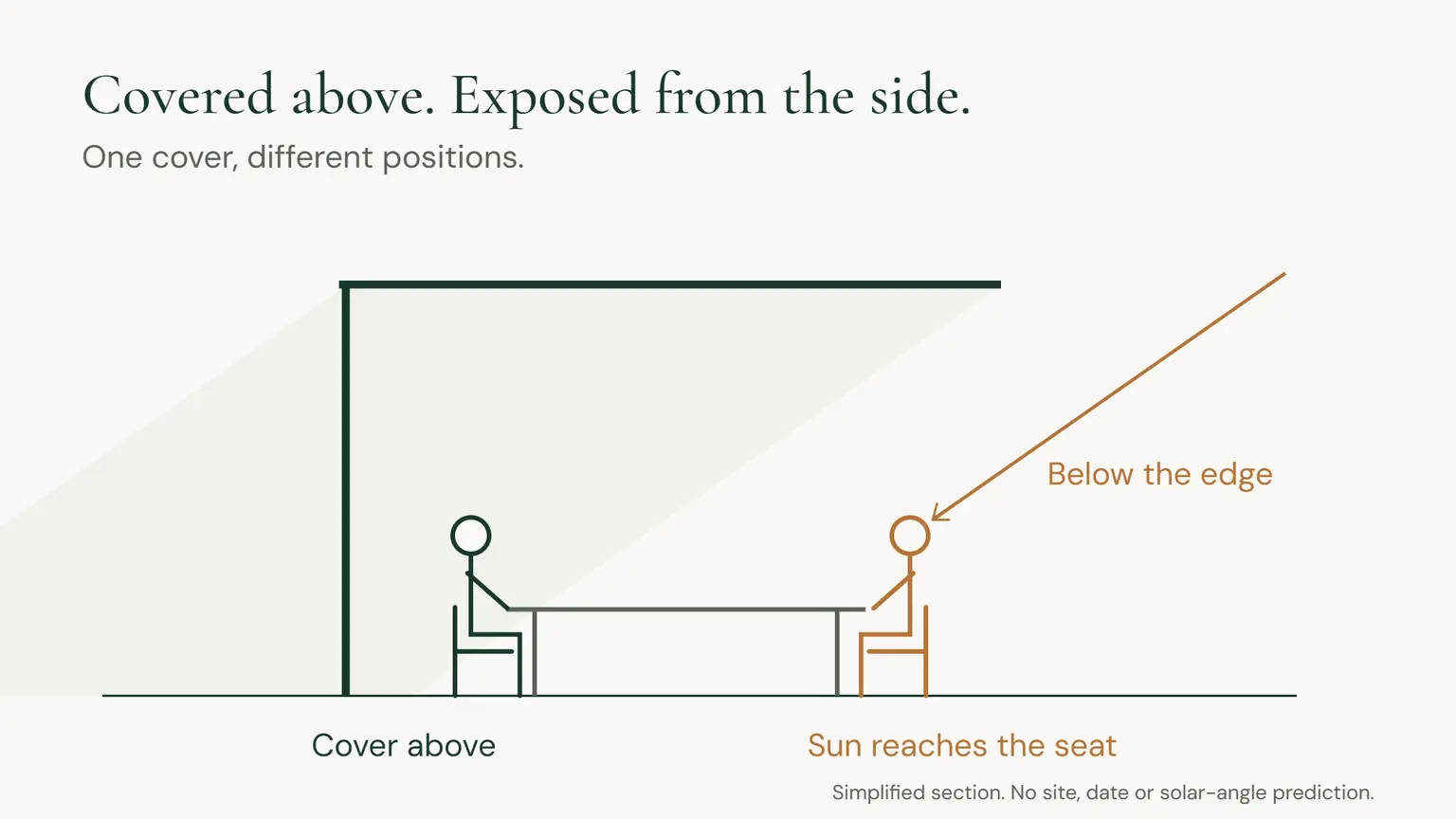
Is the sun coming through the top, or underneath the edge?
A roof-shaped outline on a plan does not tell you where its shadow will fall. Watch how sunlight reaches the seat before deciding that a larger overhead cover is the answer.
If light is passing through an open roof, investigate the roof treatment. If it is arriving beneath the outer edge, ask whether placement, projection or a side treatment addresses that particular direction. These are design questions, not interchangeable purchases.
The underlying distinction is also described in building-shading guidance: horizontal overhangs can miss lower-angle sunlight that a vertical treatment intercepts. That guidance concerns windows; applying the geometry to a patio is an inference to check for your site, not a tested pergola recommendation. Building America Solution Center: window shading.
For our four-seat example, the next useful drawing would show the sunlight reaching the two exposed chairs. A larger rectangle labeled “pergola” would not yet answer the question.
Planning reference: Building America Solution Center: window shading.
Try the furniture question before settling the structure
Could the table sit somewhere that already works better? Try a different position if there is a practical one, then repeat the observations. Change one thing at a time so you can tell what helped.
Check the ordinary movements too. Pull out every chair. Walk from the kitchen with a serving dish. Make sure the new position has not exchanged direct sun for an awkward route or a chair pressed against planting.
If you already own adjustable shade, assess it in its intended configuration and follow its operating instructions. Do not improvise suspended fabric or attachments as a test structure.
An option earns its place when it serves the seats without spoiling something else you value. Ask what happens to the garden view, the light in the adjoining room and the space around the table. A side treatment may answer one problem while changing those relationships. See that tradeoff before committing to it.
Check the season you are actually designing for
Today's photographs describe today's conditions. They are not an annual shade study. The sun's path changes with the season, and planting may look different when leaves are absent. The Department of Energy's landscaping guide makes seasonal sun and deciduous versus evergreen planting part of shade planning. DOE landscaping guide.
If you are planning in autumn for summer dinners, keep the autumn observations, but label the summer performance unverified. Ask the designer to check the relevant dates and hours using your location, site orientation and proposed geometry. A sun-path visualization is only useful here if it represents the actual site and obstructions, not a generic patio.
Trees deserve a separate timescale. Ask what a proposed tree would shade when planted and what it may shade at maturity. Species and site selection should account for growing conditions, mature spread, roots, structures and utilities, not just an appealing canopy photograph. Arbor Day Foundation: choosing a planting site.
Shade you hope to have later is not the same as shade you need next summer.
Planning reference: Arbor Day Foundation: choosing a planting site.
Turn the observations into a shade brief
Use the record to ask for a result rather than naming the product first. Copy and complete this:
If shade is one of several problems competing for attention, use the ordinary-day backyard walkthrough to set priorities first.
For permanent work, also ask the project professional to identify the required site checks, attachment design and applicable approvals. This observation record is a brief, not a construction specification.
Our example started with a shaded table and two exposed chairs. It ends with a testable request: shade all four dining seats through the intended meal, while keeping the kitchen route and garden view. Whether that calls for a different table position, adjustable shade or a designed structure remains a site-specific decision.
You do not need to choose that answer before you know what you are asking it to do.
 A little inspiration to take home.