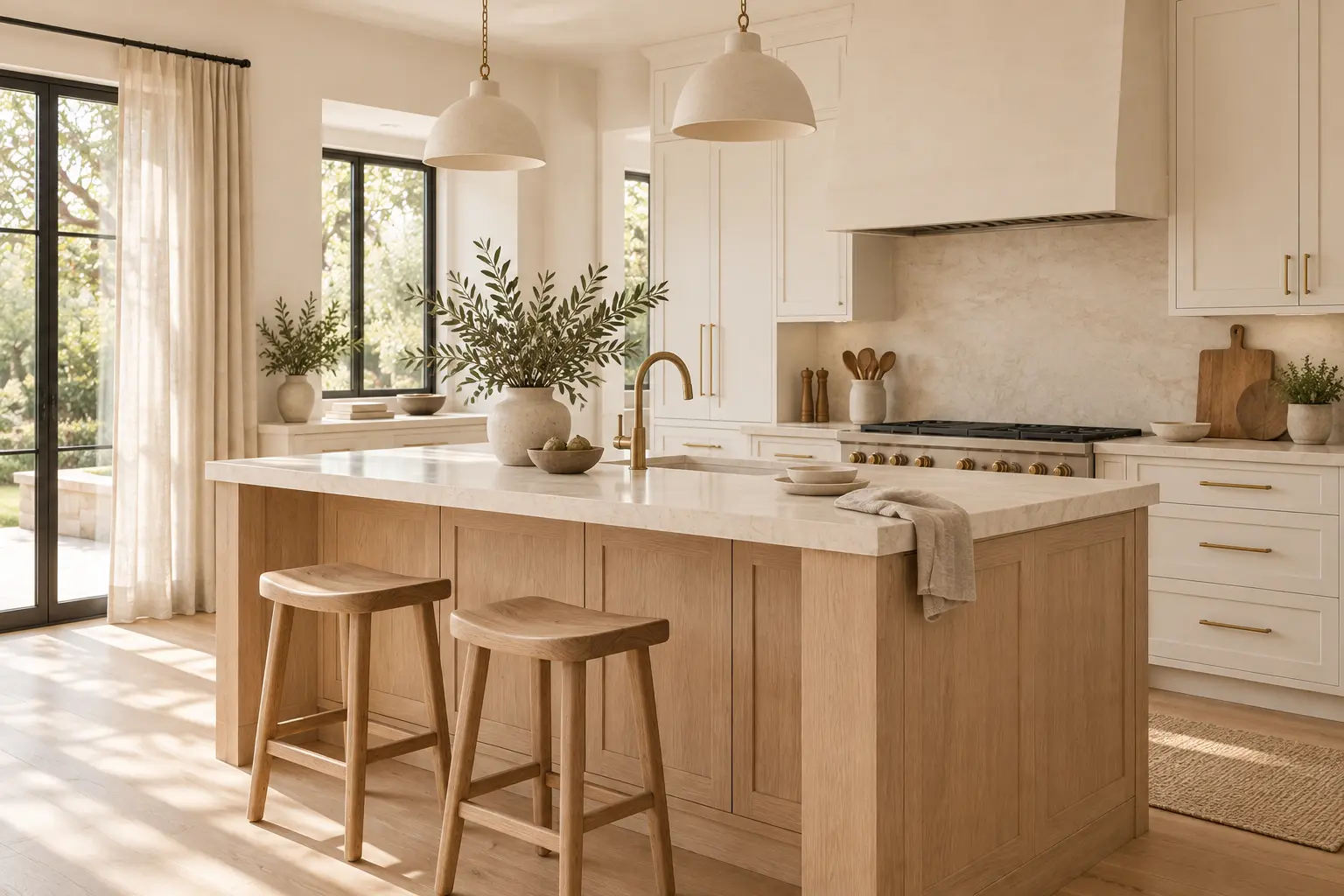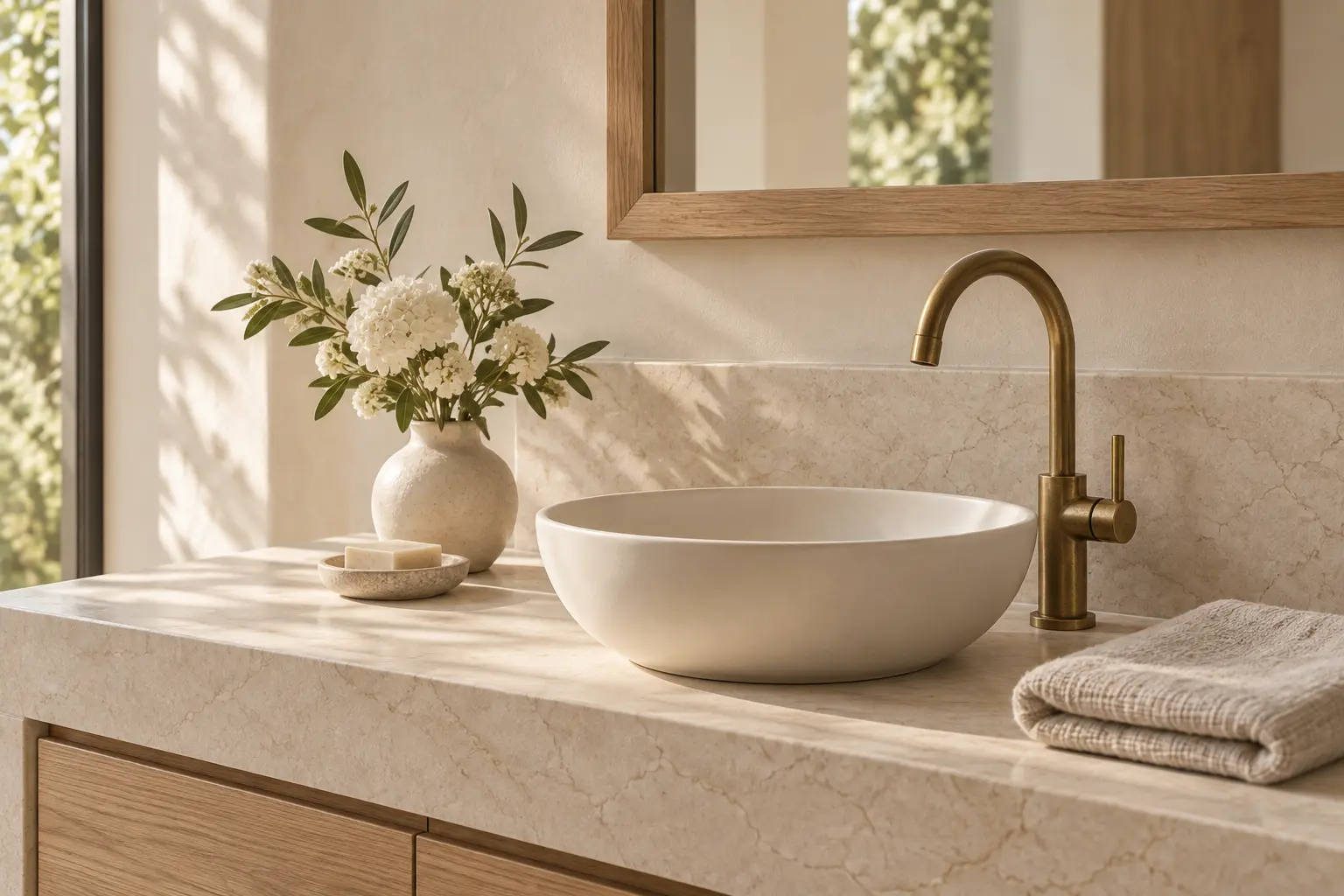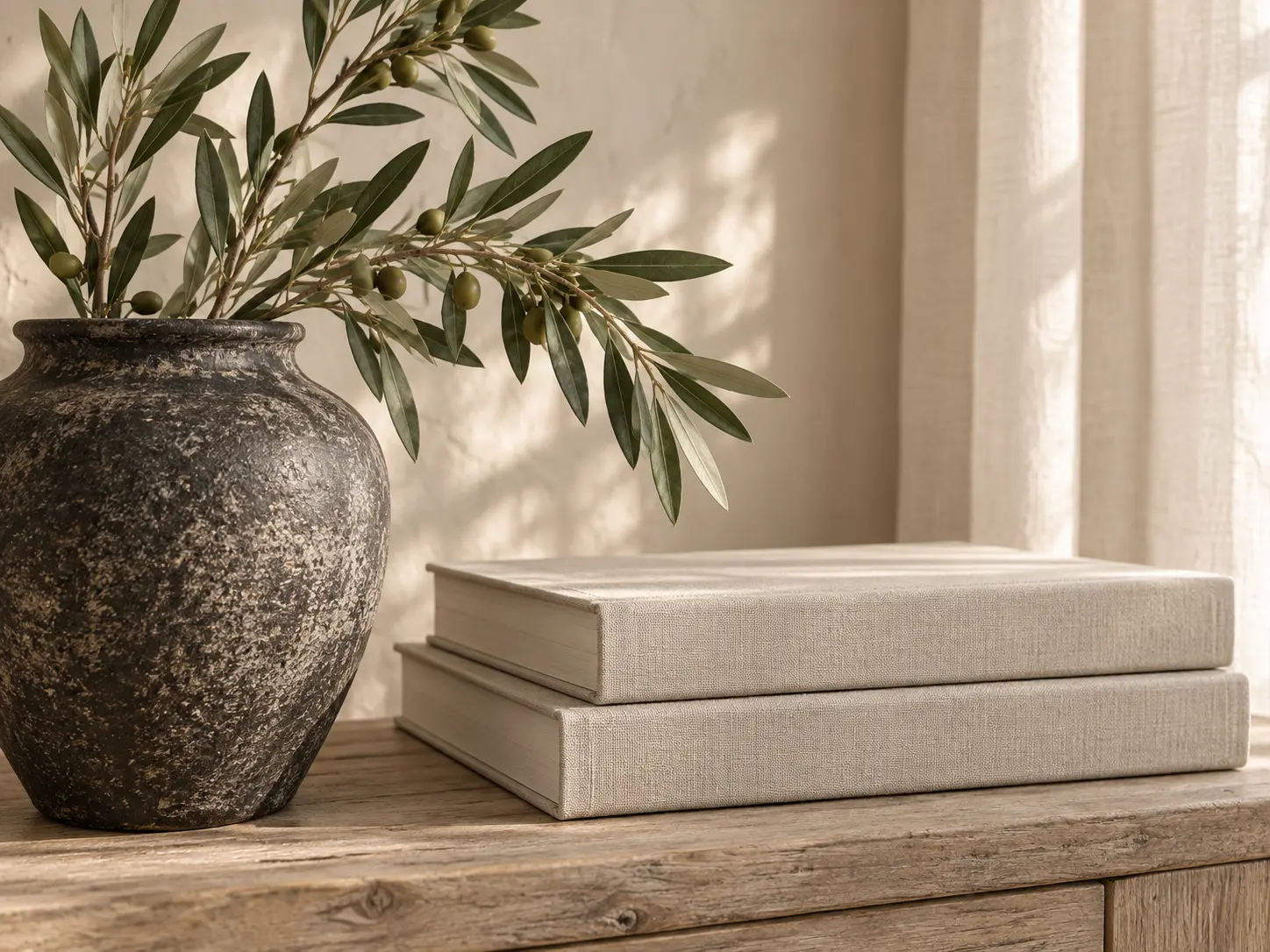

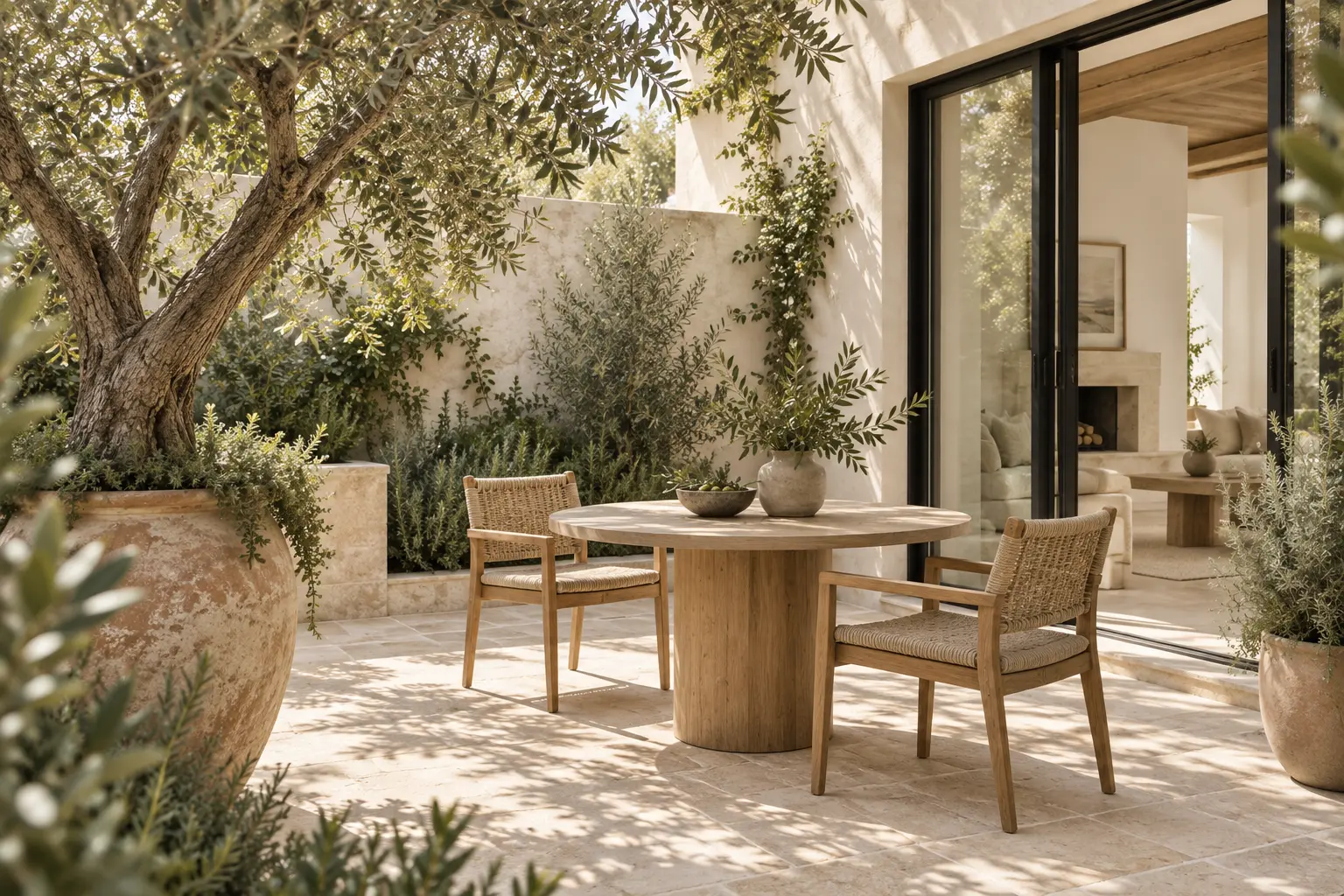
A grain that never quite repeats. The irregular edge of a handmade bowl. Light moving across a timber floor. Natural materials give us small details to notice, even in a room with very little in it.
An original design essay, illustrated with concept interiors.
Look for a conversation
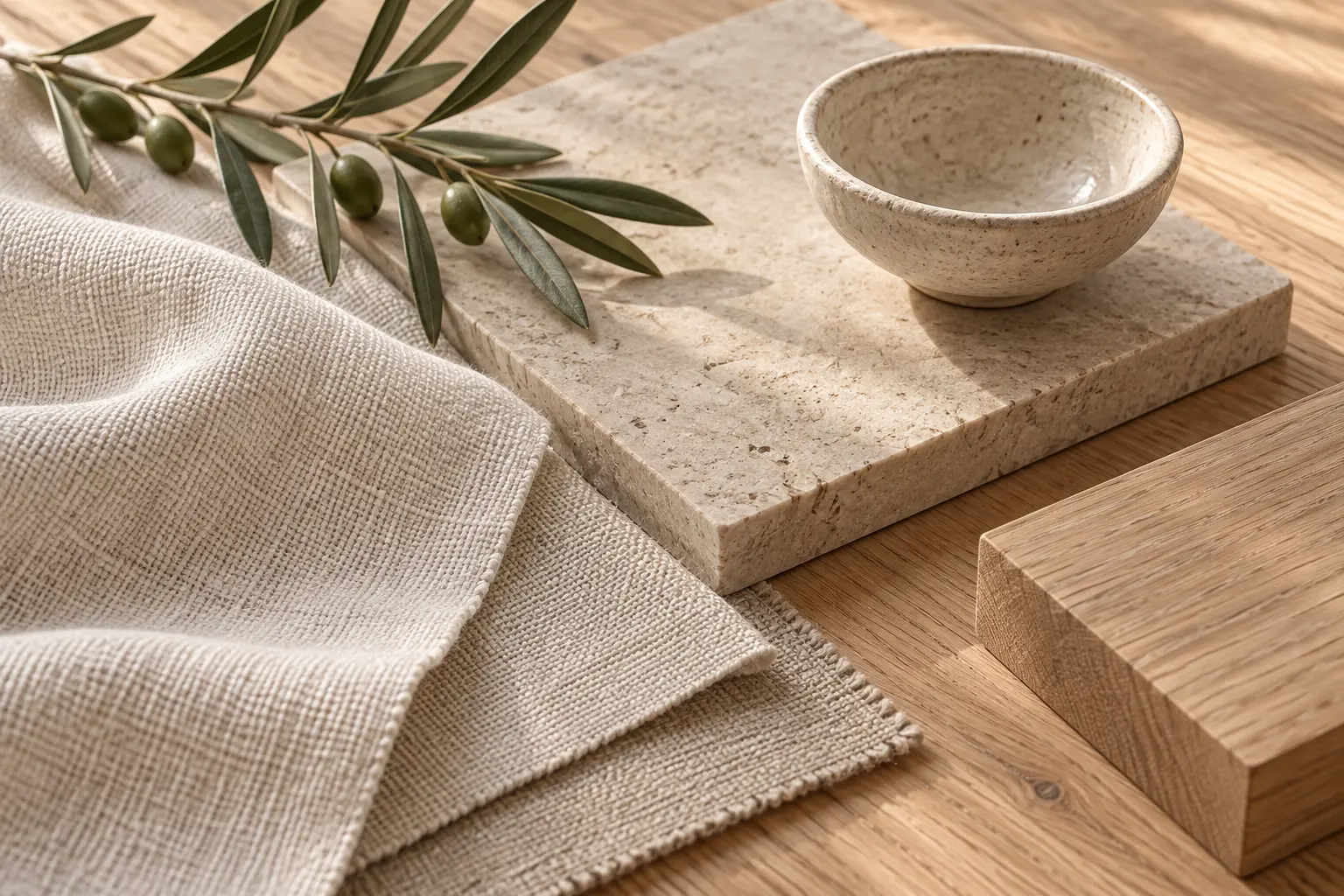
Rather than matching every finish, look at how they relate. A warm timber may sit comfortably beside a cooler, quieter surface. A loosely woven fabric can soften the appearance of a crisp architectural line.
Begin with the materials that are staying. Photograph them together, or gather small samples, and use that collection as a reference for the next choice.
A little variation is often what makes a space feel alive.
Consider the life of a material
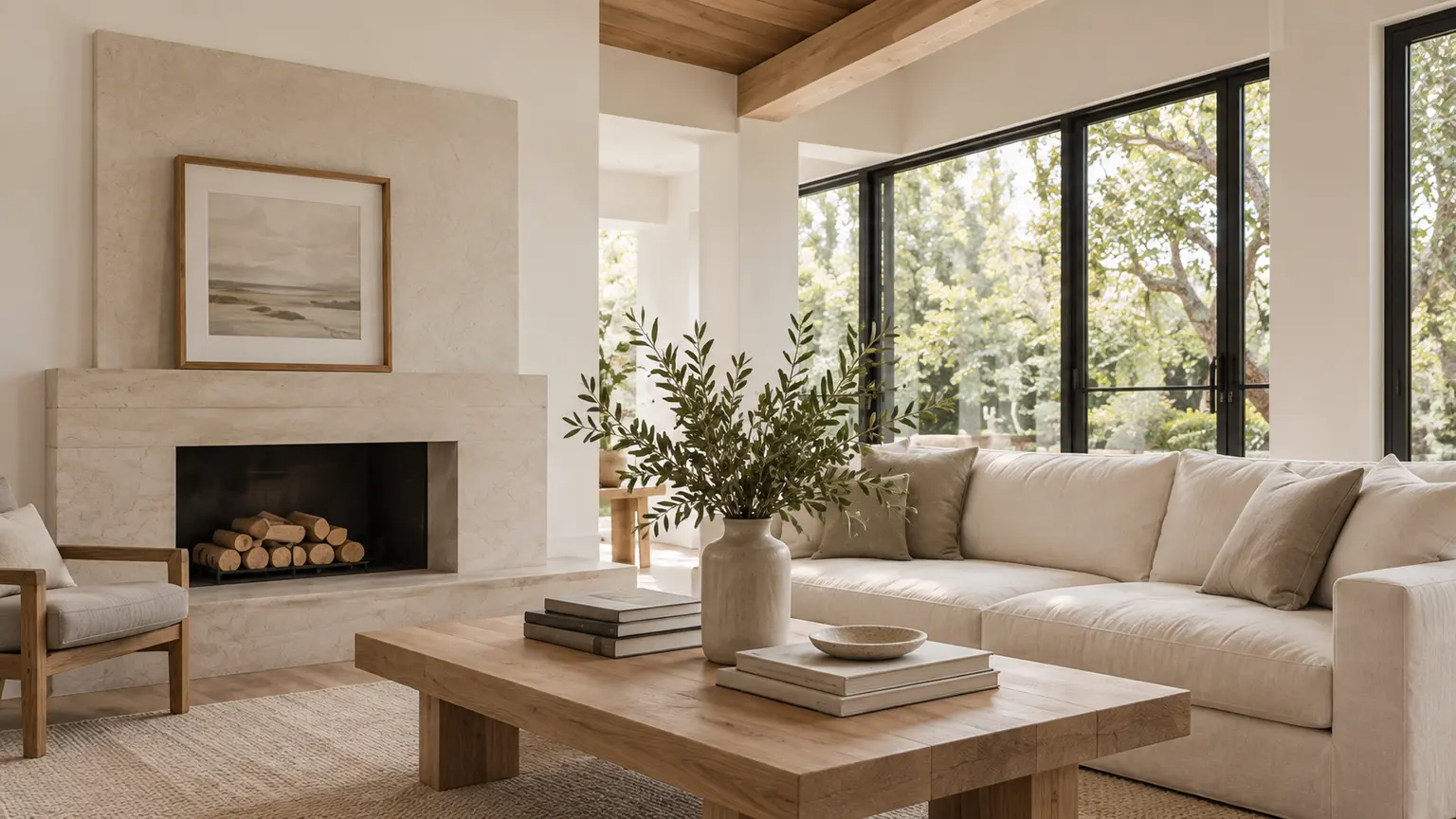
Ask how a finish is cared for, what regular use will look like, and whether it can be repaired. A material that develops visible character may suit one household and frustrate another. The right decision depends on the way you want to live with it.
For a renovation, ask suppliers for specific product information and ask your installer about suitability. A beautiful sample is the start of the conversation, not the whole decision.
Bring the outside a little closer
A view of greenery can become part of a room’s composition. Try arranging seating so that the view is easy to enjoy. Where space allows, a plant or a few clipped branches offer another way to introduce a living shape.
Let that connection remain simple. Often one well-placed element says enough.
 A little inspiration to take home.