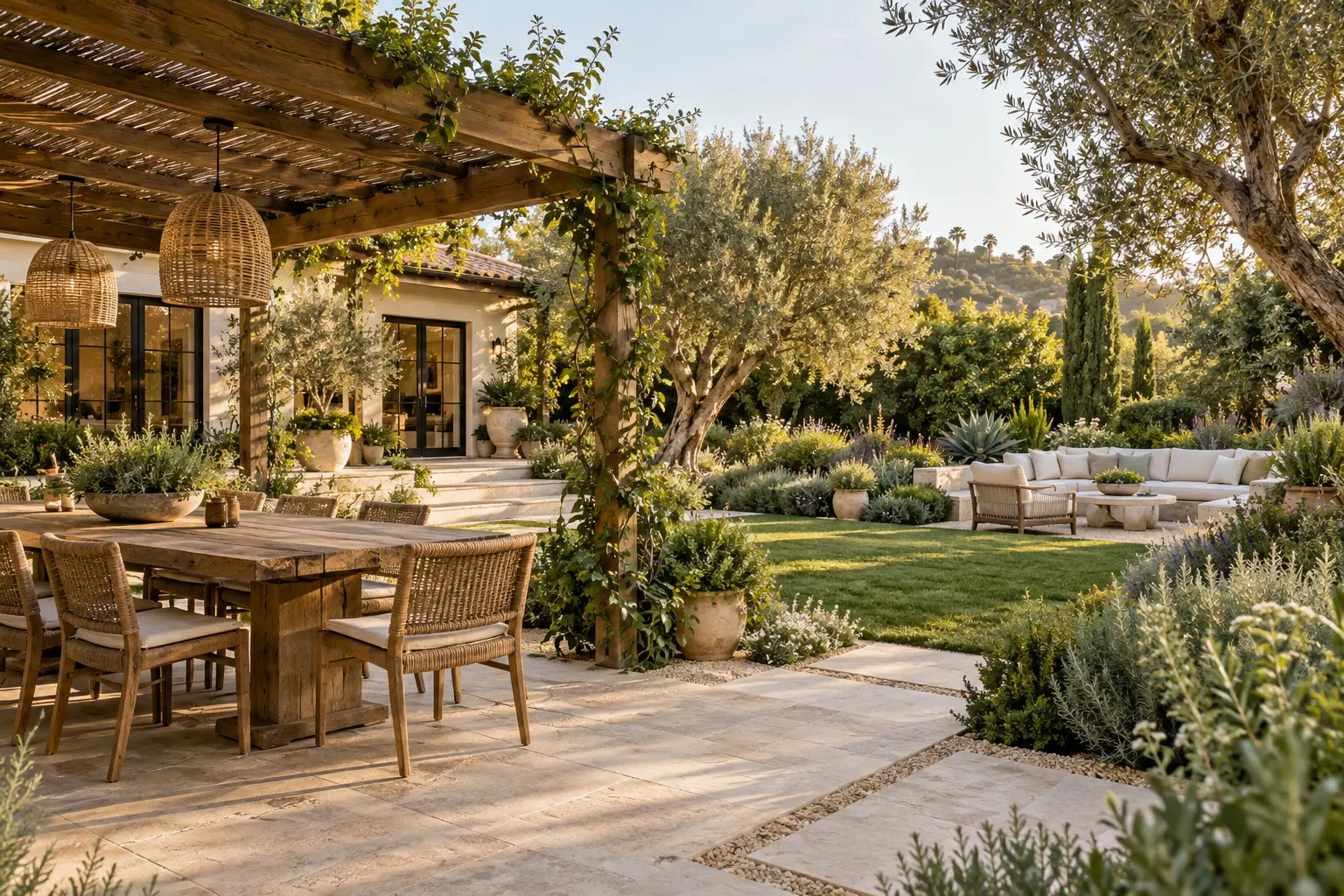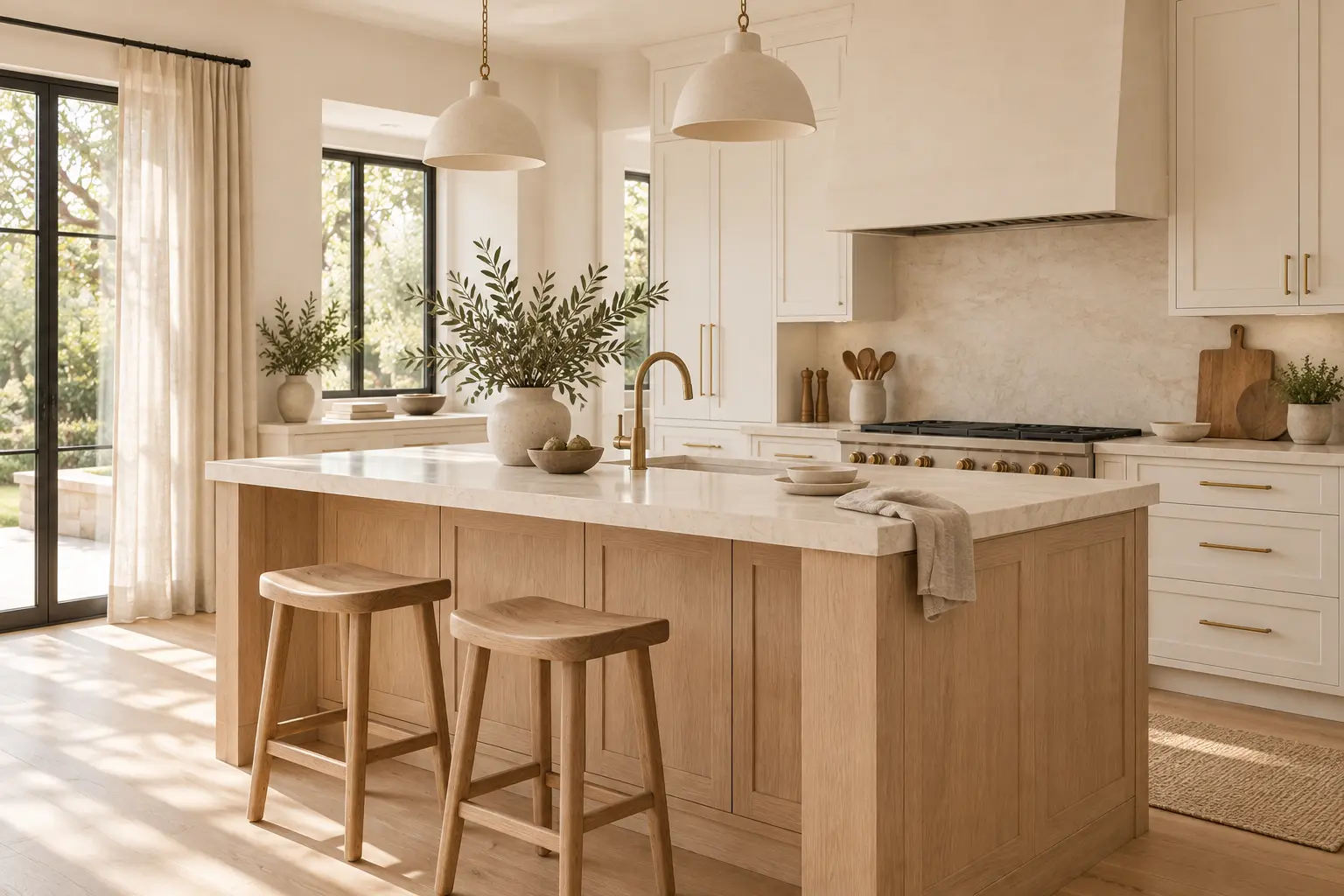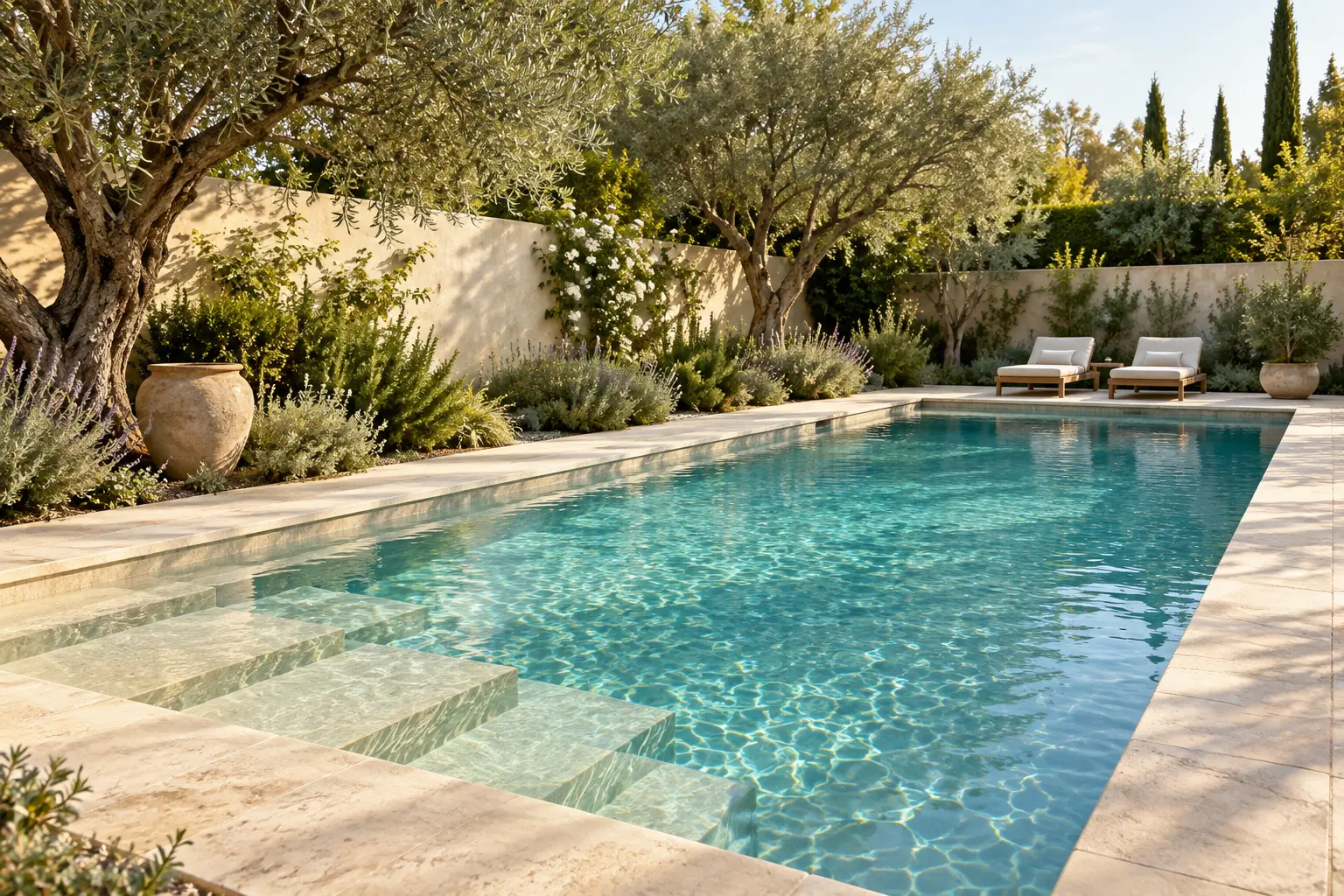
You save a photograph for its pale pool tile. In the next conversation, the discussion moves to new coping, new paving and a different place to eat outside. Some of those ideas may be welcome. Others may be a much larger project than you intended.
A planning guide with fictional examples, not a report on a completed project.
Start with the part that is not working
Before asking for a price, separate three things: what you want changed, what you hope to keep and what still needs assessment. Then identify the physical edge of the work. A label such as ‘pool remodel’ is a starting point, not a description of everything you are asking someone to do.
If you are happy with the yard but dislike the pool's finish, start the conversation with the pool. If the pool is fine but the dining area is awkward, say that. If several parts of the yard need to work differently together, ask for a whole-yard discussion.
These are ways to organize a brief, not technical categories or conclusions about what can be built. A site assessment may change the scope. Your first job is to make the reason for the project clear enough that someone can respond to it.
Try finishing this sentence before collecting more inspiration: ‘We would use the backyard more if...’ A place to eat comfortably is a different goal from a new pool surface. Both can belong in the project, but one should not quietly stand in for the other.
Still deciding what the yard should do? Start with the everyday-backyard planning guide. Once that is clear, describe the work rather than simply giving the project a bigger name.
One yard, three different requests
Imagine a backyard with an existing pool, a paved area and a dining table beside the house. The owners like the planting but dislike the pool tile. They also find the dining area crowded. This is a fictional planning example, not a completed project.
None of the requests below automatically requires every feature to be replaced. Nor does a smaller request prove that the work will be simple. The distinction gives the project team something specific to investigate instead of treating the whole yard as an open invitation.
| Starting request | What to establish |
|---|---|
| Change the pool's appearance | Which finish and tile changes are wanted, what needs assessment, and which adjoining areas the proposal covers. |
| Improve outdoor dining | What makes the dining area awkward and which arrangements are worth exploring. Keep pool appearance as a separate decision. |
| Reconsider the yard together | How the pool, dining, planting and movement should relate, with retained features and optional additions clearly identified. |
Draw the boundary on a photograph
Take a wide photograph that shows the pool and the adjoining area. Mark the places you want to discuss. Separately mark the features you hope to retain. This is a conversation aid, not a construction drawing.
Then ask the team to show where its proposed work stops. ‘Replace the paving beside the pool’ leaves room for different interpretations. Does it mean a narrow affected strip, one defined area or the entire patio? Ask for the intended area to be identified in the proposal.
Do the same for work beyond that edge. If planting or other features may be disturbed, ask how protection and any restoration are addressed. If another team will do part of the work, identify that responsibility rather than leaving it in a verbal conversation.
You are not trying to write the contractor's specification. You are making it possible to recognize whether the written scope matches the area you discussed.
Mark the edge, then ask what crosses it
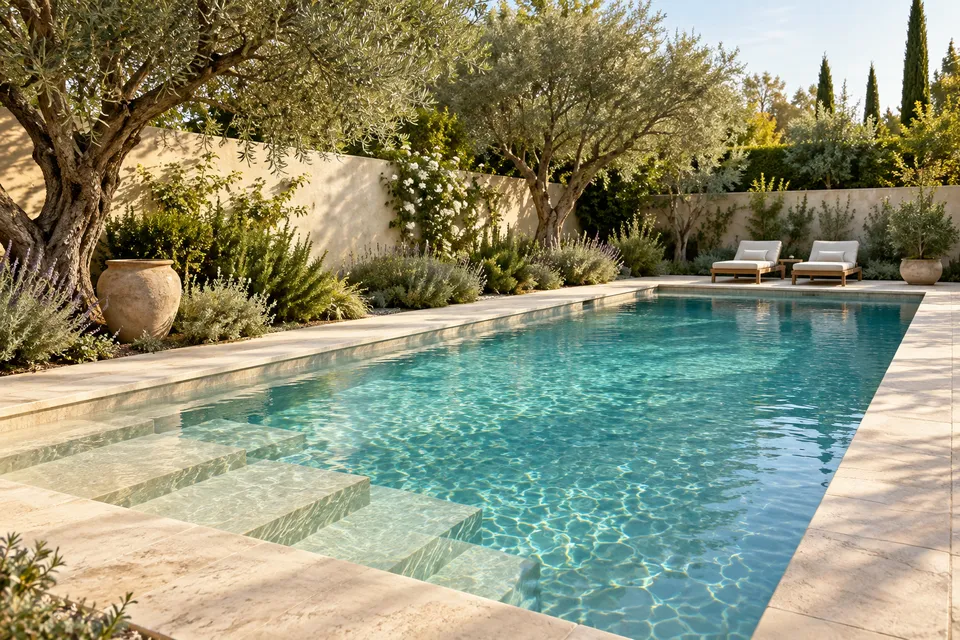
- Pool work
Name the finish or tile change you want to explore. Keep assessment questions separate.
- Adjoining paving
Ask which area is included, what may be disturbed and who handles restoration.
- Features to retain
Identify planting or other features you value. Discuss protection instead of assuming it is covered.
The line follows the visible pool edge as a starting point for discussion. It is not a proposed construction boundary or a measured plan. Ask the team to identify the actual work area.
Keep preferences separate from observations
A lighter-looking finish is a preference. A rough patch, visible crack or concern about equipment is an observation to report. You do not need to decide what caused it before asking for an assessment.
For example: ‘I'd like different waterline tile’ belongs beside ‘I've noticed a rough area on this part of the surface.’ One describes a choice. The other points the team toward something to investigate.
Ask which recommendations answer the preference and which follow from an assessment. That makes the conversation more useful than treating every line under ‘pool remodel’ as the same kind of work. A photograph alone cannot establish the cause of a crack or the condition of concealed work.
Two visible choices at the pool edge
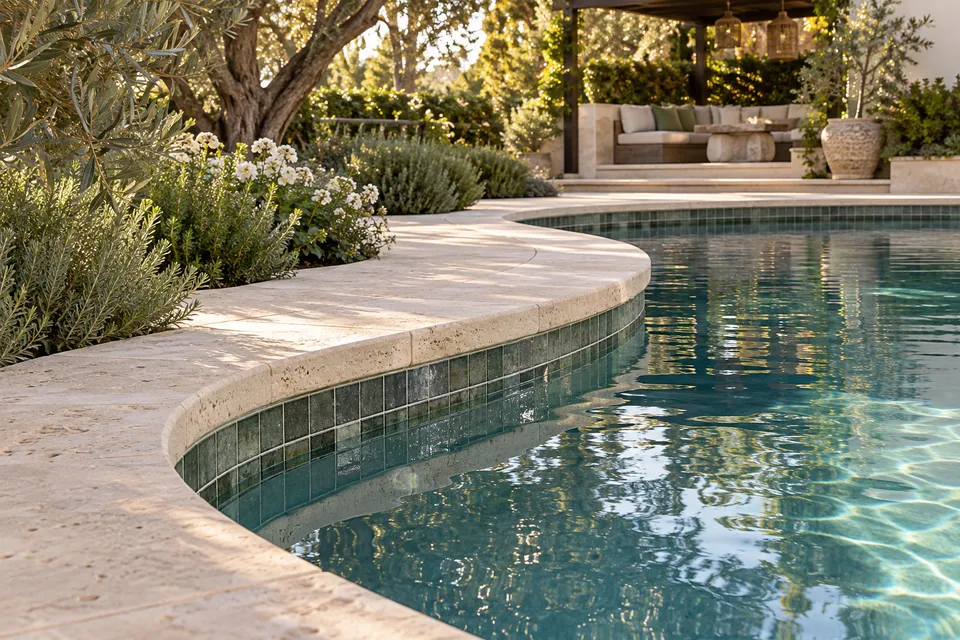
- Coping
The pale edge at the top. Say whether you want to keep it or discuss a change.
- Waterline tile
The green band below. A tile preference is not automatically a request to replace the coping or adjoining paving.
Use a detail photo to point out the material you mean. The appearance of a finished edge does not establish its condition or what replacement would involve.
Read the omissions, not just the heading
The California Contractors State License Board recommends detailed descriptions of the products and how work will be performed in a home-improvement contract. Its consumer guidance is a useful reference when a broad project label needs to become a written agreement.
In the fictional excerpts below, the second outline says more about paving, but it still does not tell you exactly where the work ends. The first has an unanswered question, not a confirmed exclusion.
Ask each team to identify the area, selections and responsibilities in its own proposal. Do not fill in missing information yourself or decide the scopes are equivalent because the headings match. This reading exercise helps prepare questions; it does not review the terms of your individual agreement.
Planning reference: CSLB: What is a Contract?.
| Outline A | Outline B |
|---|---|
| Replace the pool finish and waterline tile. | Replace the pool finish and waterline tile. |
| Adjacent paving is not mentioned. | Replace affected paving; the area is not identified. |
Give optional ideas their own place
An outdoor kitchen can be interesting without belonging in the main request. Put it under ‘explore separately’ rather than letting it expand every version of the project. Ask for its scope and pricing to be distinguished so you can discuss the choice on its own.
If you want to work in phases, describe the usable result you want from the first phase. Then ask the team to explain dependencies on later work before treating the sequence as settled. A wish to postpone something is not evidence that it can be built independently.
For the fictional yard above, the first message could be as simple as the notes below. Send your version with a marked photograph. You have given the team a problem to solve, features to consider retaining and a boundary to explain. That is more useful than asking for a ‘full remodel’ and hoping everyone means the same thing.
 A little inspiration to take home.