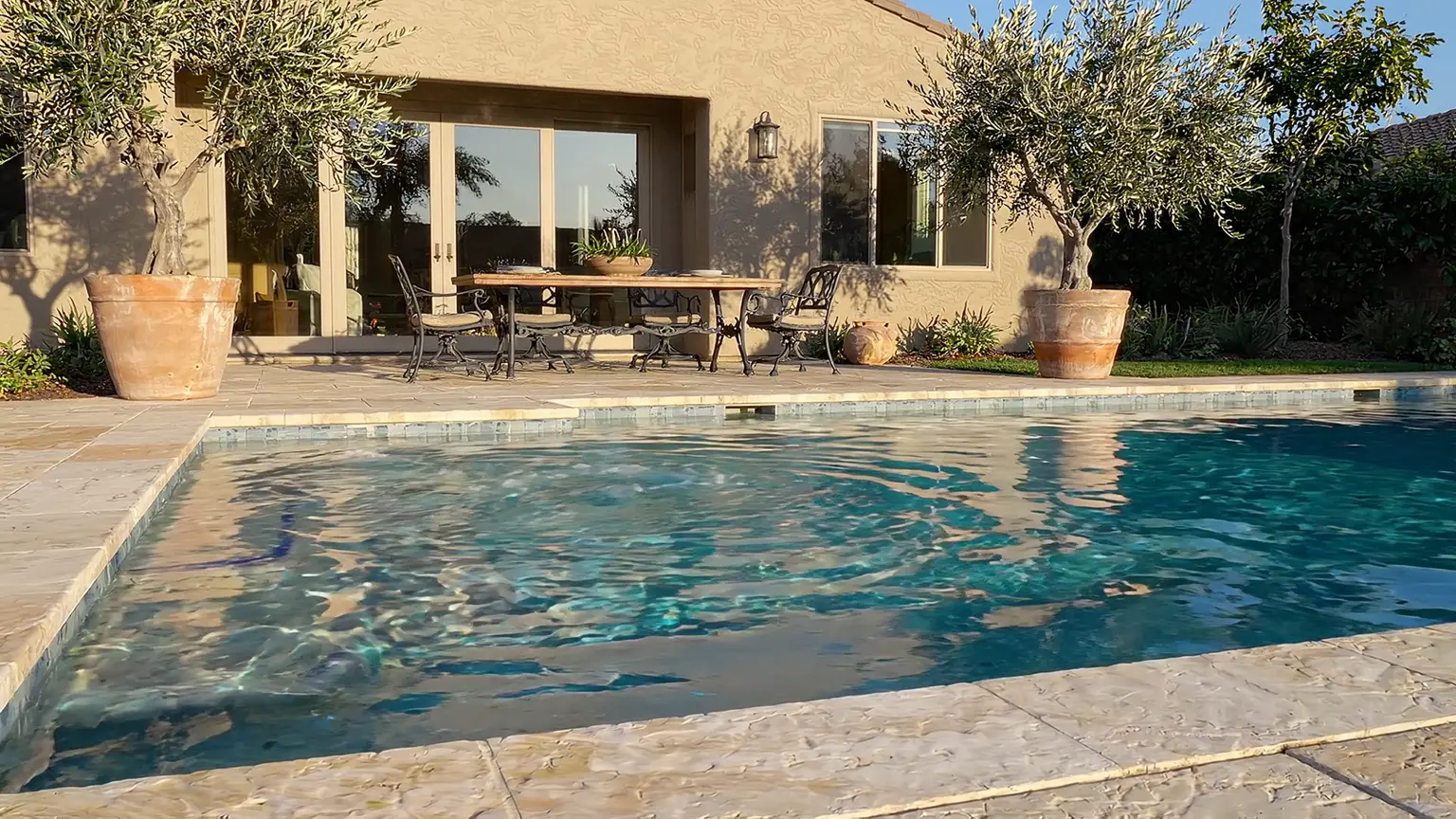
A finish sample can help you describe the look you want. It cannot tell you why part of the existing surface has changed, or what work that area needs. Before choosing a replacement, separate the preference from the observation and have the concern assessed.
That small distinction gives your pool-remodel conversation a much better starting point than “we think it needs resurfacing.”
A planning guide, not a diagnosis of a photographed pool or a repair instruction.
Watch the story
Loading the film connects to YouTube. Google’s privacy policy applies.
Put the wish and the concern on different lines
Imagine a homeowner preparing to update a pool. They like a darker blue finish, dislike how one step feels underfoot and have noticed a pale area near it. This is an example, not a diagnosed pool.
Their first note might say: “Replace the old finish with something darker and smoother.” It sounds clear, but it bundles three different things together: a color preference, a texture concern and a visible change.
Try this instead:
| What I want | What I have noticed |
|---|---|
| A deeper-looking water color | A pale area near the shallow steps |
| A different feel underfoot | One step feels rougher than I remember |
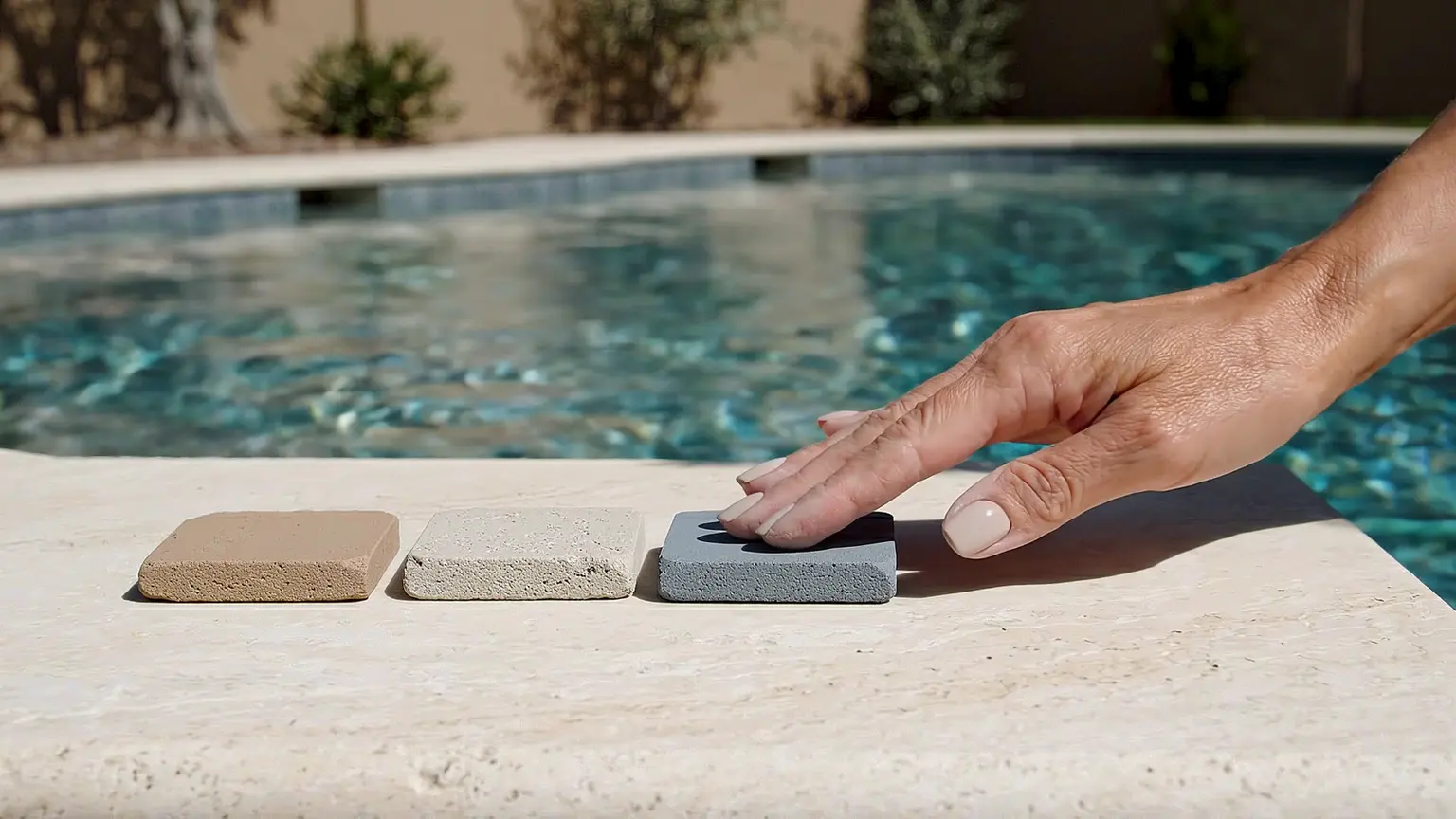
Leave the explanation open. The right-hand column should not quietly become “failed plaster” or “chemical damage” unless that conclusion has actually been established.
This is not an argument against changing the finish. You may still choose to. It is a way to avoid asking a design choice to answer a condition question.
Show where it is, not just what it looks like
A close photograph can make a patch easy to see and impossible to locate. Pair it with a wider view from a safe position outside the pool, showing the same area in relation to the steps, waterline or another recognizable feature. Keep the original images and dates.
In the example, “pale patch” becomes “pale area beside the shallow steps, first noticed this month.” If the date is uncertain, write that. If you only recently began looking closely, do not turn the date you noticed it into the date it developed.
Add a short note about what changed, if anything: appearance, texture during ordinary use, or a concern you have already raised with the service team. Record what you remember without deliberately rubbing, scraping or otherwise testing the finish.
The photographs help someone find the concern. They do not establish its cause, depth or repair method. Do not drain the pool, enter an empty pool or try an acid treatment to get a better view for this exercise. Ask a qualified pool professional how the area should be assessed.
Bring the history, including the gaps
The finish exists in water, not on a sample board. The National Plasterers Council's technical bulletin on cementitious finishes describes materials, application, start-up and water chemistry as relevant to their performance. It is a reason to bring the pool's history into the conversation, not a reason to diagnose a patch yourself.
Gather the finish name and installation date if you have them, previous repair or treatment records, and available service or water-test records. Ask the service provider for records you do not keep yourself. Do not substitute a guessed finish type or age just to complete the page.
Keep the distinction between “not available” and “nothing happened.” A missing service record does not prove the water was neglected. A current reading does not give you a history of every earlier condition.
Our example homeowner now has a more useful account: a preferred color, two observations, dated photographs and whatever records are available. They still do not have a diagnosis. That is exactly the point of preparing for an assessment rather than arriving with a repair already named.
Planning reference: National Plasterers Council's technical bulletin on cementitious finishes.
Ask what the proposed work is meant to solve
When you discuss the pool, return to each observation. Ask the professional to explain what they found, what remains uncertain and what further assessment, if any, is needed before a recommendation.
Then connect the recommendation to the concern: “Which part of the proposed work addresses this area?” If resurfacing is recommended, ask what preparation or other work the recommendation depends on. If the concern needs a different specialist, ask who should assess it before you commit to the finish selection.
Do not treat an attractive after-photo as the answer. It shows a look. Your conversation needs an explanation of your pool's observed condition and the proposed response.
If the assessment and the color choice are happening in the same appointment, keep both. Simply avoid letting the sample selection close an unanswered condition question.
Then judge the finish as a finish
Once the concern has an assessment path, the samples have a clearer job. Compare the appearance and feel you actually want, alongside the exact product's care requirements.
For water color, keep expectations grounded. PebbleTec's customer guidance explains that depth, sun exposure, lighting and surrounding features can influence the result, and that a sample or image is not an exact finished-pool color guarantee. Ask the supplier how to compare your shortlisted finishes under useful viewing conditions rather than choosing from one phone photograph.
For texture, ask to examine a representative sample and discuss how the finish is intended to feel in use. Do not assume that every finish with the same broad material name feels identical, or that changing color will resolve the specific roughness you noticed.
Also ask who handles start-up and what care information you will receive for the selected product. Keep the manufacturer's instructions with your records. This guide does not replace those instructions or prescribe a treatment for an existing surface.
Planning reference: PebbleTec's customer guidance.
Copy this before the appointment
Keep one short record for each area you want assessed. A single page with honest unknowns is more useful than a confident diagnosis copied from an image search.
If the conversation expands beyond the interior finish, use our pool-versus-backyard scope guide to keep the additional work clear.
For our example, the request becomes: “We want a deeper water color, but first please assess the pale area beside the shallow steps and the roughness we have noticed there. We have attached wide and close photographs and our available service records. Please explain what you can establish and what needs further investigation before recommending the work.”
You have not chosen the repair for the professional. You have made the question easier to answer.
If that discussion expands beyond the interior finish, use our pool-versus-backyard scope guide to keep the additional work clear. For now, the useful order is simpler: describe the change, understand the concern, then choose the finish.
 A little inspiration to take home.