
Your spreadsheet can still produce a very tidy total.
That is the problem with building a backyard budget from the numbers you happen to have: the missing prices disappear, even when the work remains. Before deciding whether a remodel fits your budget, list what it will take to reach the finished result you want. Keep the unpriced items beside the subtotal, not outside the plan.
This is a way to organize your own project information, not a price estimate for a California backyard. It will not tell you what your project should cost. It will make the next pricing conversation much more useful.
A planning method using illustrative examples, not a market-price estimate or a report on the pictured properties.
Watch the story
Loading the film connects to YouTube. Google’s privacy policy applies.
Start with the first evening you want to use it
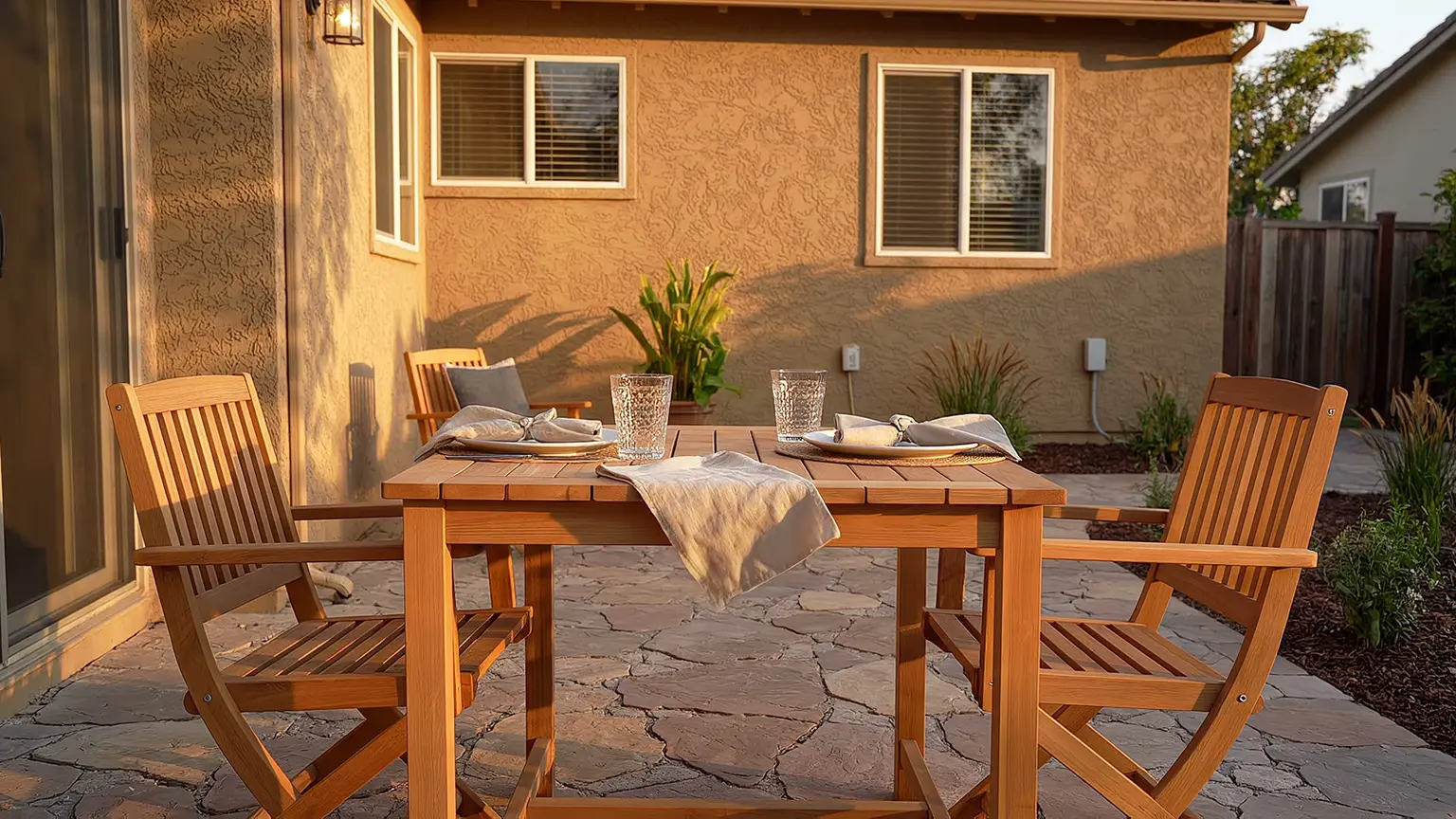
Imagine a homeowner replacing a tired patio. The contractor's proposal covers the agreed surface work. The homeowner pictures dinner outside when it is finished: a table, four chairs, a usable route from the house and the planting border put back in order.
Those are not necessarily all part of the same purchase.
Write down that finished-use picture before copying numbers into a sheet. Then ask where each part is accounted for. The table may be an owner purchase. The planting may need a separate conversation. Existing chairs might be staying, in which case there is no reason to invent a replacement cost.
Keep the list specific to your yard. A pool, outdoor kitchen and new lighting do not belong in every backyard budget just because they appear in someone else's checklist. If the project itself is still expanding, use the backyard scope guide to decide what belongs in this request.
If the project is still expanding, use the backyard scope guide to decide what belongs in this request.
Give every item an address, even before it has a price
In our example, the homeowner starts a project inventory. It is separate from the contractor's proposal and does not change what either party has agreed to do.
| Project item | Where it stands | Next action |
|---|---|---|
| Agreed patio surface work | Quoted package | Record the proposal version and what its total covers |
| Selected finish | Allowance inside that package | Keep the amount linked to the package; confirm how selection changes are handled |
| Dining furniture | Owner purchase, not yet selected | Price the actual set and its delivery before adding a purchase amount |
| Adjacent planting restoration | Excluded from the patio proposal | Establish the work needed and obtain a separate price |
| Future shade structure | Optional, not part of this phase | Keep it visible under later or undecided work |
These entries do different jobs. “Quoted” describes price information. “Allowance” describes a provisional contribution whose treatment needs checking. “Owner purchase” identifies who is arranging an item. “Later” describes timing. An item can belong to more than one of those categories, so do not force them into one yes-or-no column.
For each line, keep a price status, an owner and a phase. A line with no amount can still say what needs to happen next. That is useful information, not a spreadsheet error.
Look for the work between the purchases
Walk through the proposed project on paper from preparation to use. What has to move out? What arrives? Who installs it? What leaves the property? What needs to be put back?
For this patio, the questions might include moving existing furniture, removing the old surface, taking debris off site, delivering the selected materials and restoring the planting edge. These are prompts to check against the actual proposal, not a list of inevitable extra charges. Several may already be included. Some may not apply.
Check fees separately from responsibility. Knowing who arranges a permit does not, by itself, answer whether its fee is in the quoted total. The California Contractors State License Board's homeowner checklist specifically asks homeowners to check permit-fee inclusion as well as the contract's work description. Ask about the requirements for your actual project rather than assuming that every backyard change needs the same approvals.
For owner purchases, ask what the listed price includes. Delivery, assembly or another service may be included, separate or unnecessary. Record the answer instead of applying a guessed surcharge to everything.
The most revealing line in the example is planting restoration. “Excluded” answers a question about the patio contractor's price. It does not decide whether the homeowner still wants that border restored. If the work remains part of the intended result, keep it in the project inventory until someone resolves it.
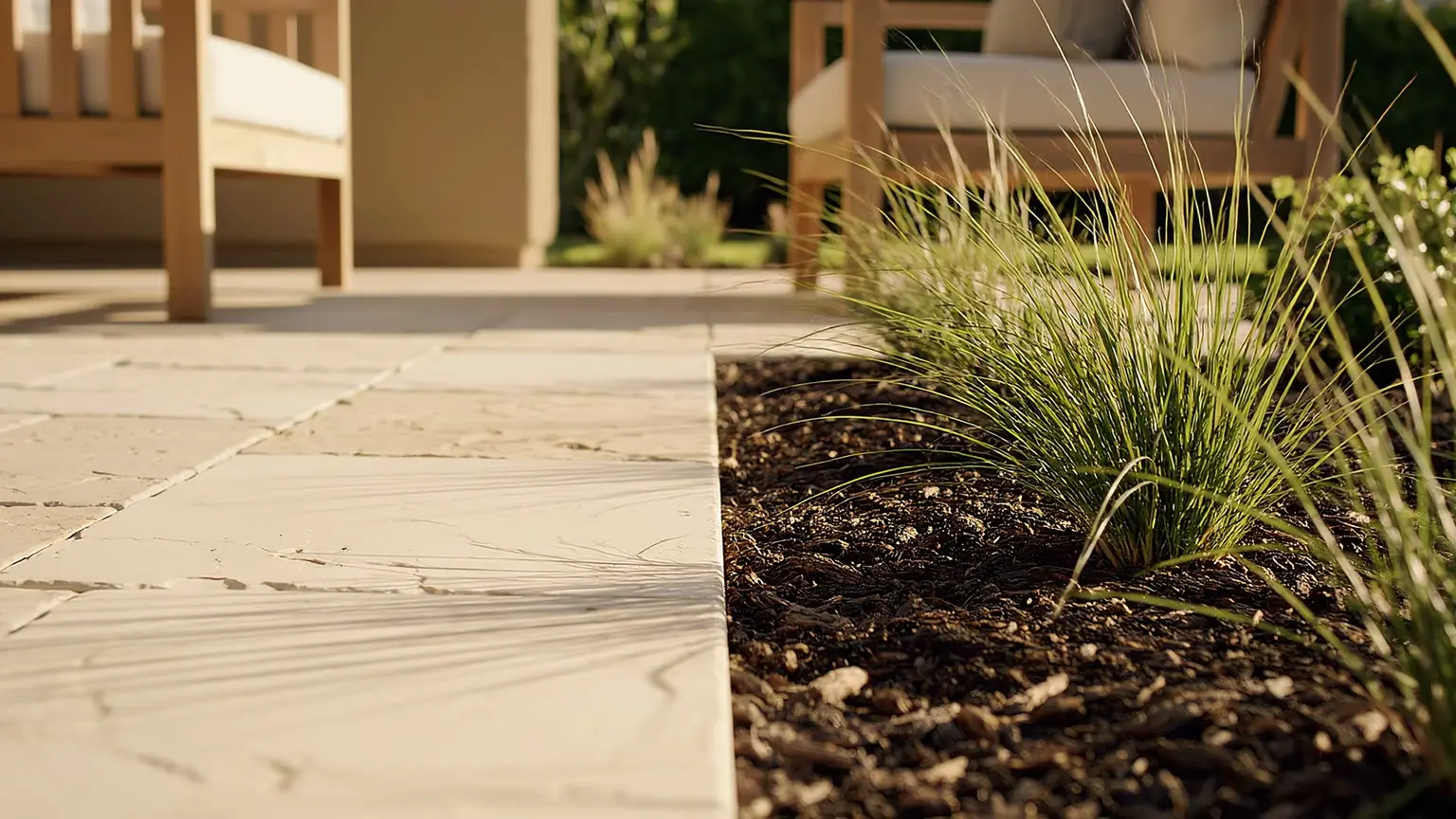
Planning reference: California Contractors State License Board's homeowner checklist.
Keep a blank from becoming a zero
Here is a made-up arithmetic example, not a suggested patio price. The homeowner has a quoted package of $20,000 and a separate, fully specified furniture purchase of $2,000. Both amounts are entered once. The selected finish's allowance is already inside the package, so it is not added again.
The entered subtotal is $22,000. Planting restoration still has no price.
Now compare that subtotal with a $25,000 planning target. The arithmetic leaves $3,000, but that is not yet money available for an upgrade. The unpriced restoration still has a claim on the plan, and the selected finish may change the package amount under its agreed allowance terms. No separate reserve has been included in this example.
The honest summary is: $22,000 entered. One item unpriced. Finish adjustment unresolved. Not “$3,000 to spare.”
A blank means you do not have an amount. Zero should mean you have a reason to record no additional amount for that line, with the reason beside it. “Already counted in the package above” is different from “we have not asked yet.”
If you keep a reserve, name it separately and state whether it sits inside or outside your target. Do not let the same money serve as the reserve, the answer to known missing work and the shopping budget for optional additions. There is no universal reserve percentage supplied by this exercise, and a reserve does not price an item you already know is missing.
Move work to later without making it disappear
Suppose the homeowner postpones the shade structure. Move it to a later column rather than deleting it. Keep any known amount and the reason for deferring it visible. The current-phase subtotal may change, but the full wish list has not become less expensive simply because part of it moved off screen.
Ask the project team whether later work depends on something being decided now, or could disturb newly completed work. That is a coordination question, not a reason to authorize every future feature immediately. Do not infer a safe construction sequence from the order of rows in your budget.
The University of Maryland Extension's landscape-planning guidance recommends setting priorities and planning implementation over time. Its local planting advice is not a California specification; the useful principle here is to keep a wider plan while choosing what to do first.
Separate ongoing ownership costs from this installation budget too. Maintenance or replacement spending can matter to your choice, but mixing recurring amounts with a one-time project subtotal makes both harder to understand.
Planning reference: University of Maryland Extension's landscape-planning guidance.
Copy this project inventory
Use one row per item or clearly defined package. If you enter a package total, reference its included components without adding them again.
When the inventory is clearer, use the proposal-comparison guide to examine two contractors on the same basis.
| Field | What to write |
|---|---|
| Item and boundary | What work or purchase does this line represent? |
| Phase | Now, later or undecided |
| Responsibility | Contractor, homeowner, another provider or unresolved |
| Price status | Quoted, allowance, unpriced, or no additional amount with a reason |
| Amount and source | Amount, dated proposal or supplier reference, and what it includes |
| Counted elsewhere? | Name the package or line that already contains it |
| Open question | What still needs pricing or clarification? |
| Next action | Who will answer it, and what will count as a usable answer? |
Keep three summaries together: the entered subtotal for this phase, the items still unpriced and the adjustments still unresolved. Keep later and undecided work visible below them. A subtotal without those notes is easier to read and easier to misunderstand.
For our homeowner, the next message is concrete: “Please confirm what the patio package includes for removal, off-site disposal and the selected finish. Planting restoration is excluded, so we need its scope and a separate price. We are buying the furniture ourselves. Please flag anything needed for this phase that is not covered by those entries.”
Ask for the answer in the relevant written proposal or revision, not just in your private notes. Your inventory helps you ask; it is not a substitute for agreed project documents.
When you later compare contractors, use the proposal-comparison guide. This first check has a different purpose: make sure the project you intend to finish has not quietly become smaller than the budget you think you have.
 A little inspiration to take home.