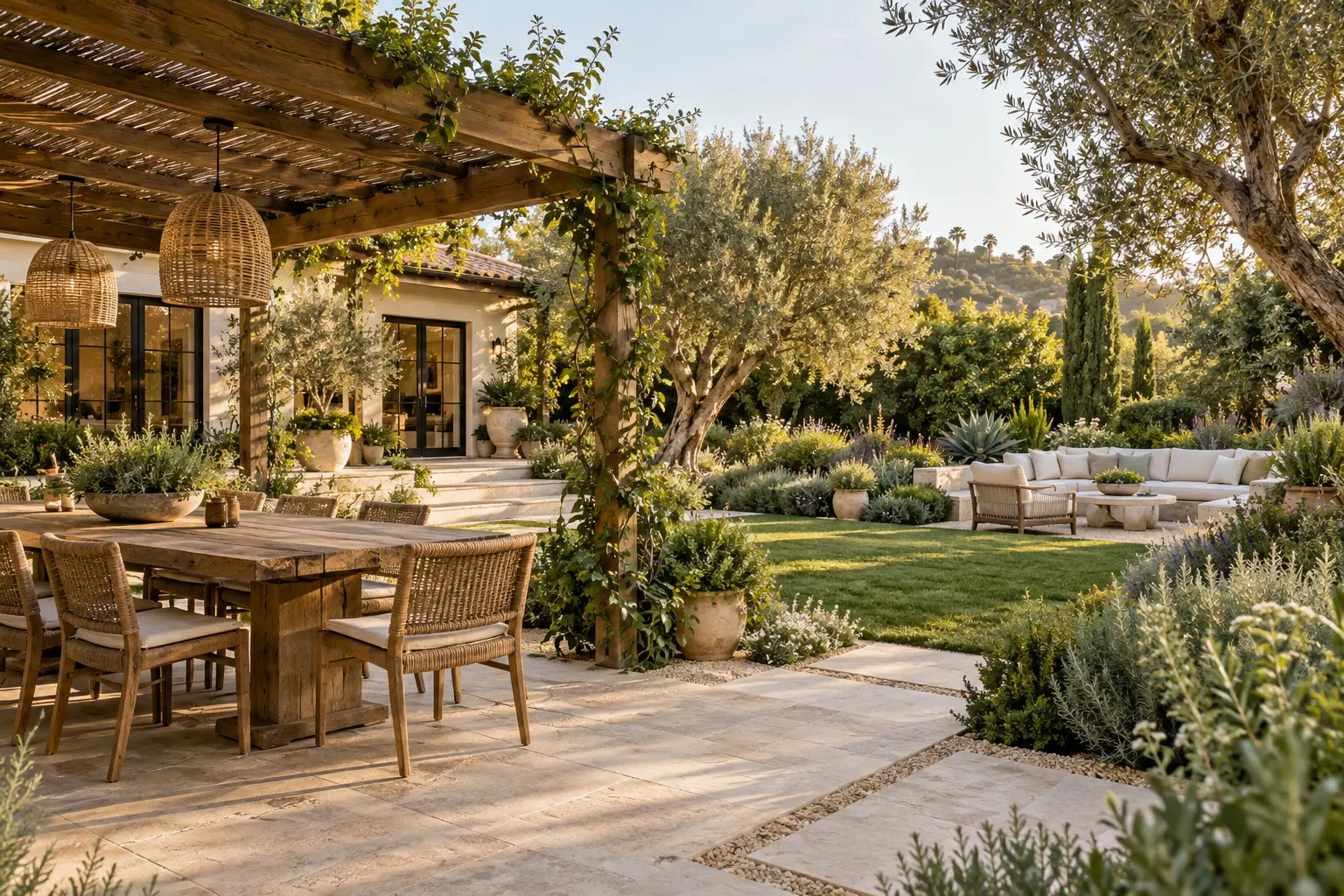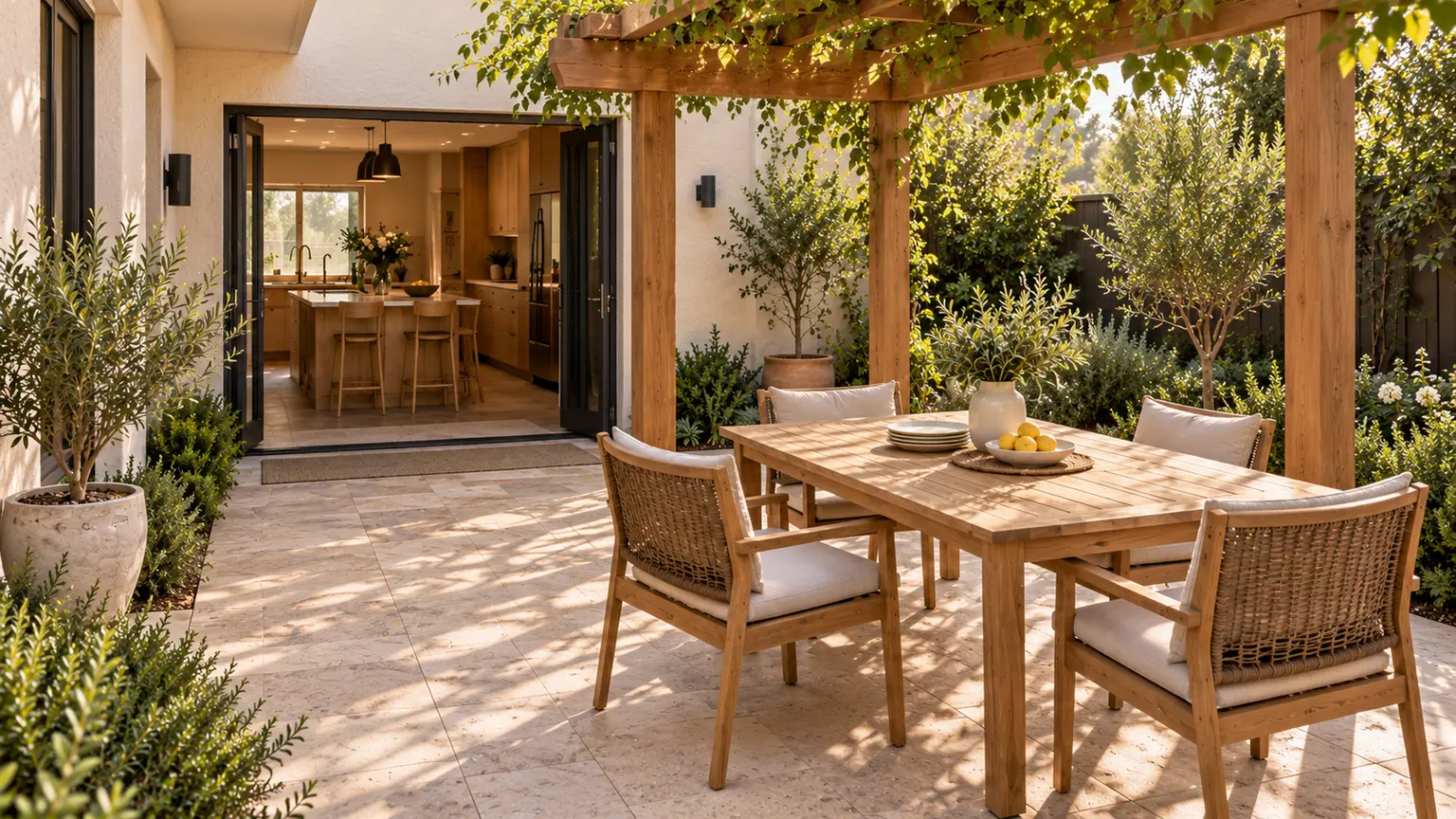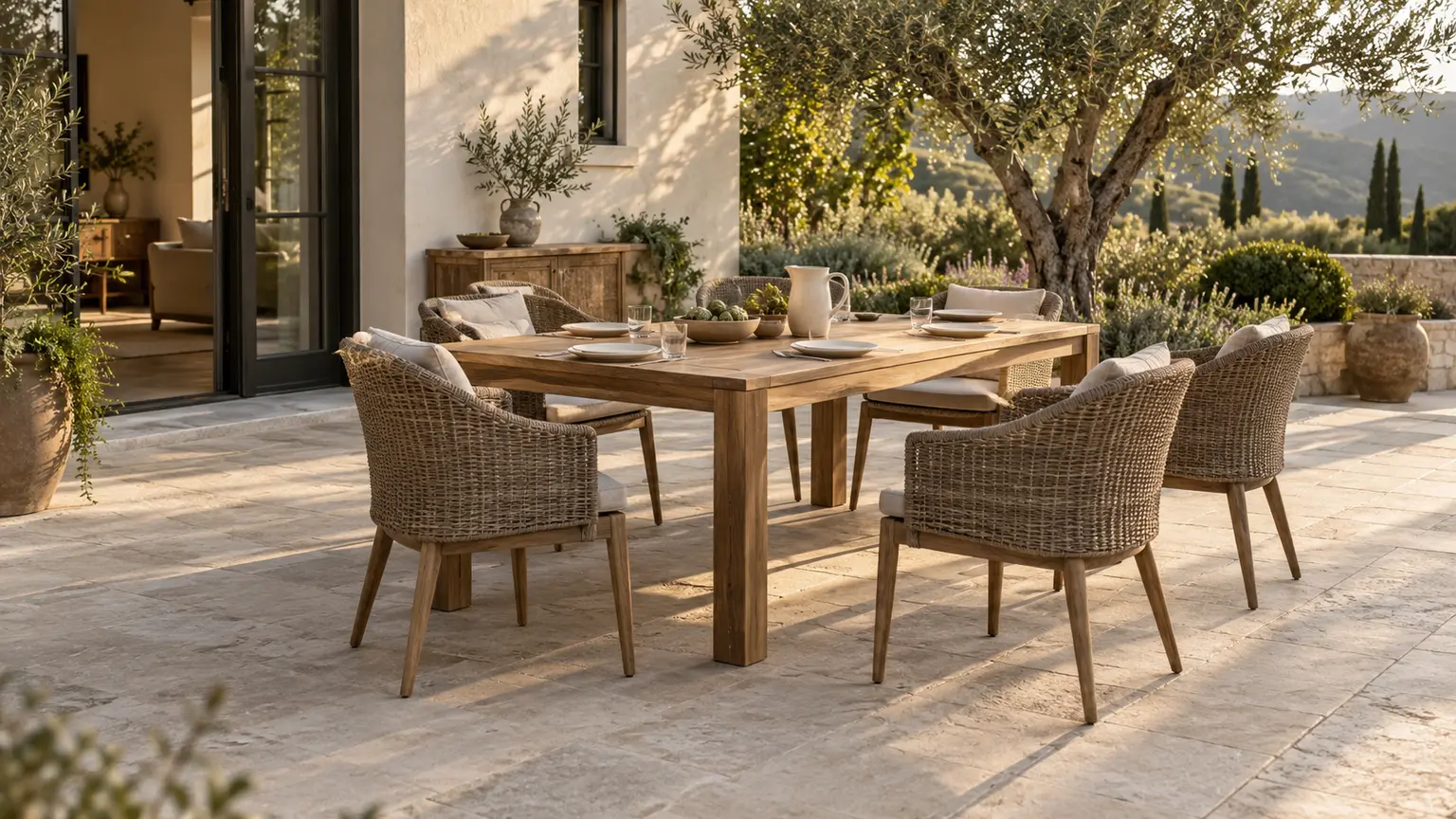
The table looks perfectly sized with the chairs tucked in. Then someone sits down by the door, another person arrives with a serving dish, and the route disappears.
Measuring the tabletop would not have caught that. The useful test is the dining set in use: people seated, a chair being pulled back and someone carrying food from the house. Try those moments before choosing the largest table the patio can hold.
You do not need to redesign the whole backyard to do this. You need the dimensions of the furniture you are considering, a few chairs and a realistic idea of an ordinary meal.
A furniture-planning guide, not a clearance standard or an assessment of the pictured terrace.
Watch the story
Loading the film connects to YouTube. Google’s privacy policy applies.
Draw the table, then add dinner
Mark the proposed tabletop on the patio using a surface-safe temporary method. Keep the actual product dimensions beside you. Include the extended length if you are considering an extending table.
That outline is only the start. Place your existing chairs around it as stand-ins, then pull them out as you would for a meal. If they differ from the proposed chairs, record the difference in width and depth. A narrow kitchen chair cannot prove that a broad outdoor armchair will work in the same spot.
Try sitting down and getting up at each position. Keep the nearby door usable in its normal opening position, and include fixed obstacles such as a post, planter or step in the test. Stay on stable, level footing; do not improvise a setup beside an unprotected edge.
Look at three different states: put away, seated and getting up. If you only photograph the first, you are documenting how the patio looks between meals.
This is a furniture-use rehearsal, not a clearance standard or an accessibility assessment. Test with the people and any mobility equipment that need to use the space; get appropriate design advice where access or safety needs cannot be resolved by an informal trial.
For the wider setting, try the ordinary-evening backyard walkthrough before planning larger changes.
Check below the tabletop
Two tables with similar tops can arrange their seats differently. The RH outdoor seating guide tells buyers to consider leg placement, overhang and chair width as well as the table's dimensions. A seating label is a starting point, not proof that your particular chairs will work.
Before ordering, ask for the space between the legs where each chair will sit. Check the arm height against the underside of the table, including the apron: the support beneath the tabletop. PODIUM's dining-set guide shows how an apron can stop an armchair from tucking in. That is a compatibility detail to check on your chosen pieces, not a reason to rule out every armchair.
If you can try the set in person, sit at an end and along a side. Notice whether a leg or stretcher competes with your feet, whether the chair pulls in far enough and whether neighboring arms touch. If you cannot try it, ask the supplier to confirm the exact table-and-chair combination, rather than relying on a styled photograph.
The small question to settle is not simply "How many does it seat?" It is "Which chairs, in which positions?"
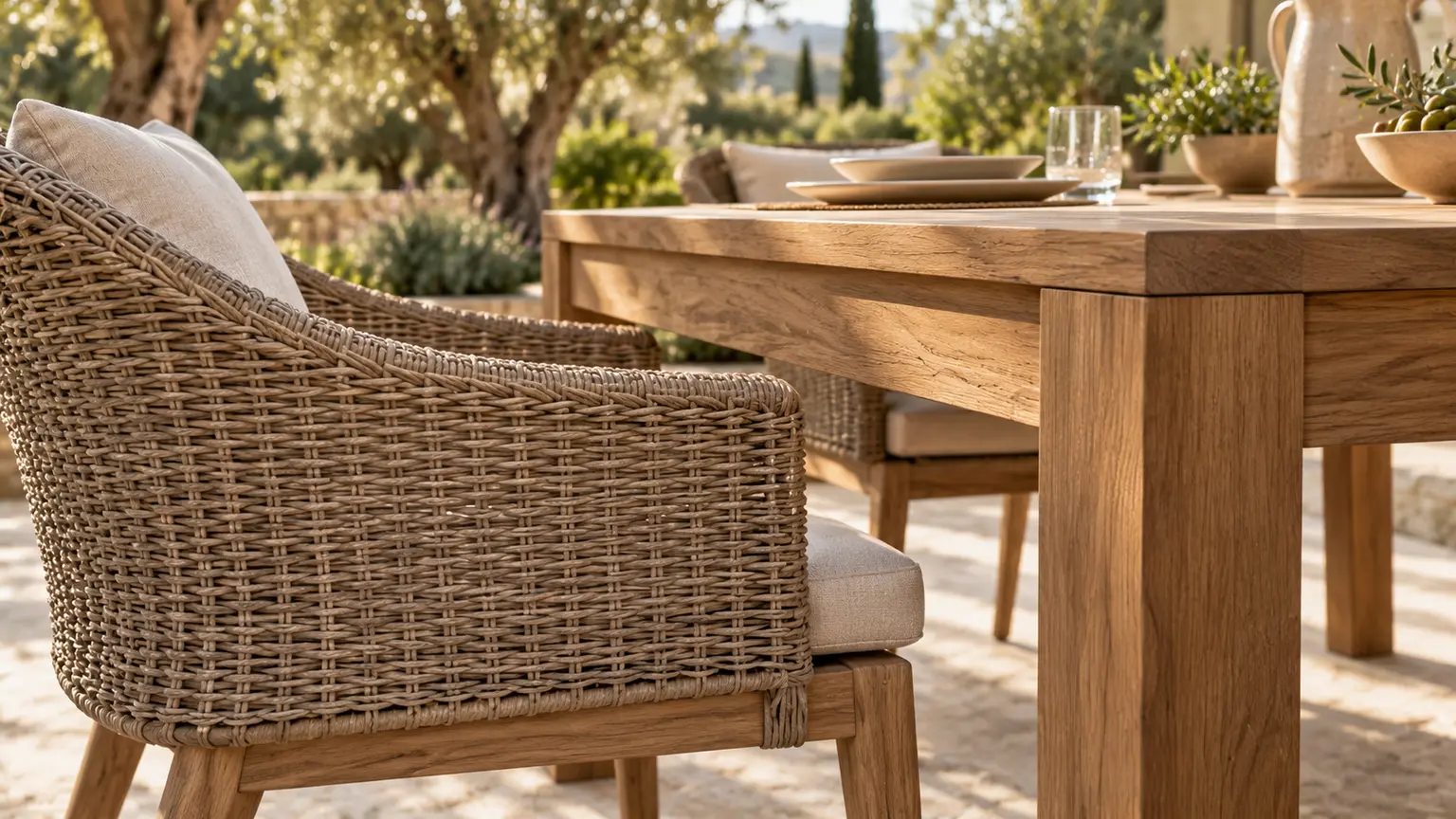
Planning reference: RH outdoor seating guide.
Planning reference: dining-set guide.
Leave the chairs out when you test the serving route
Start at the door you actually use with food. Carry an empty tray to the table while the chairs remain in their dining positions. Do not tuck them away to make the route work.
Can you approach the table without turning sideways, stepping into a planting bed or asking a seated person to move? Can that person get up without blocking the only practical way through? Note the particular conflict, rather than writing that the entire patio feels too small.
Imagine a rectangular table centered under a pergola. It looks balanced from the house, but the near-end chair occupies the route from the kitchen. Moving the table away from the door might help. Rotating it might help. Both could also create a new conflict at the other end.
Change one thing, then repeat the same test. Try position before replacement; try a different chair arrangement before assuming the paving needs to grow. A round table is an option to test, not an automatic cure. Its chairs still need somewhere to go.
There is a separate question at the end of that walk: where does the tray land? Put out the plates, glasses and serving dishes you normally use. If the only landing place is someone's setting, decide whether you want more tabletop space or a nearby serving surface. Then test the route again with that surface included. A sideboard that solves serving but blocks the door has moved the problem.
Give the occasional extra guests their own plan
Imagine a household that eats outside as four, but wants room for six when friends visit. Compare those two setups instead of asking one photograph to stand for both.
| Everyday dinner | Dinner with guests |
|---|---|
| Four actual dining positions | Two additional positions, tested rather than assumed |
| Normal table length | Extended length, if the table has an extension |
| Normal route from the house | The same route with every seat in use |
| Usual serving dishes | Extra place settings and food on the table |
If the guest setup only works after moving a planter or another chair, include that in the decision. Where will it go? Is that a reasonable change to make when you host, or something you will resent doing every evening?
Also decide where additional chairs will live between visits. A set that works when everyone is seated still needs a sensible everyday arrangement.
You may prefer a smaller permanent table with a workable guest setup. You may find that regular hosting justifies a larger one. The point is to choose knowingly, rather than discovering that the advertised extra seats consume the route you rely on.
Take this short record shopping
Keep one note for each table-and-chair combination, with a photograph of your test:
Table dimensions, including its extended size if relevant.
Chair width, depth and arm height, plus any differences from your stand-ins.
The usable space between table legs and beneath the apron, confirmed by the supplier.
What happened when everyone sat down, got up and used the serving route.
Where food landed and where extra chairs would be stored.
The one change that improved the arrangement, and anything still unresolved.
Do the final check at the time you expect to eat. A layout can work beautifully for movement and still put a guest in direct sun; use our patio shade guide for that separate observation.
The best result is not the maximum number of chairs squeezed around a top. It is an arrangement you can use without resetting the patio every time someone brings out dinner.
Check the dining location at the time you will use it with the backyard shade guide.
 A little inspiration to take home.