Basic new-pool package
$55,000 to $75,000Los Angeles new-pool reference · USD per described projectSimple pool package; the low end can represent a smaller or different pool type.



Swimming, sitting on the edge and walking back into the house are different parts of the same project. Give the pool, its equipment and the surrounding yard their own place in the plan.
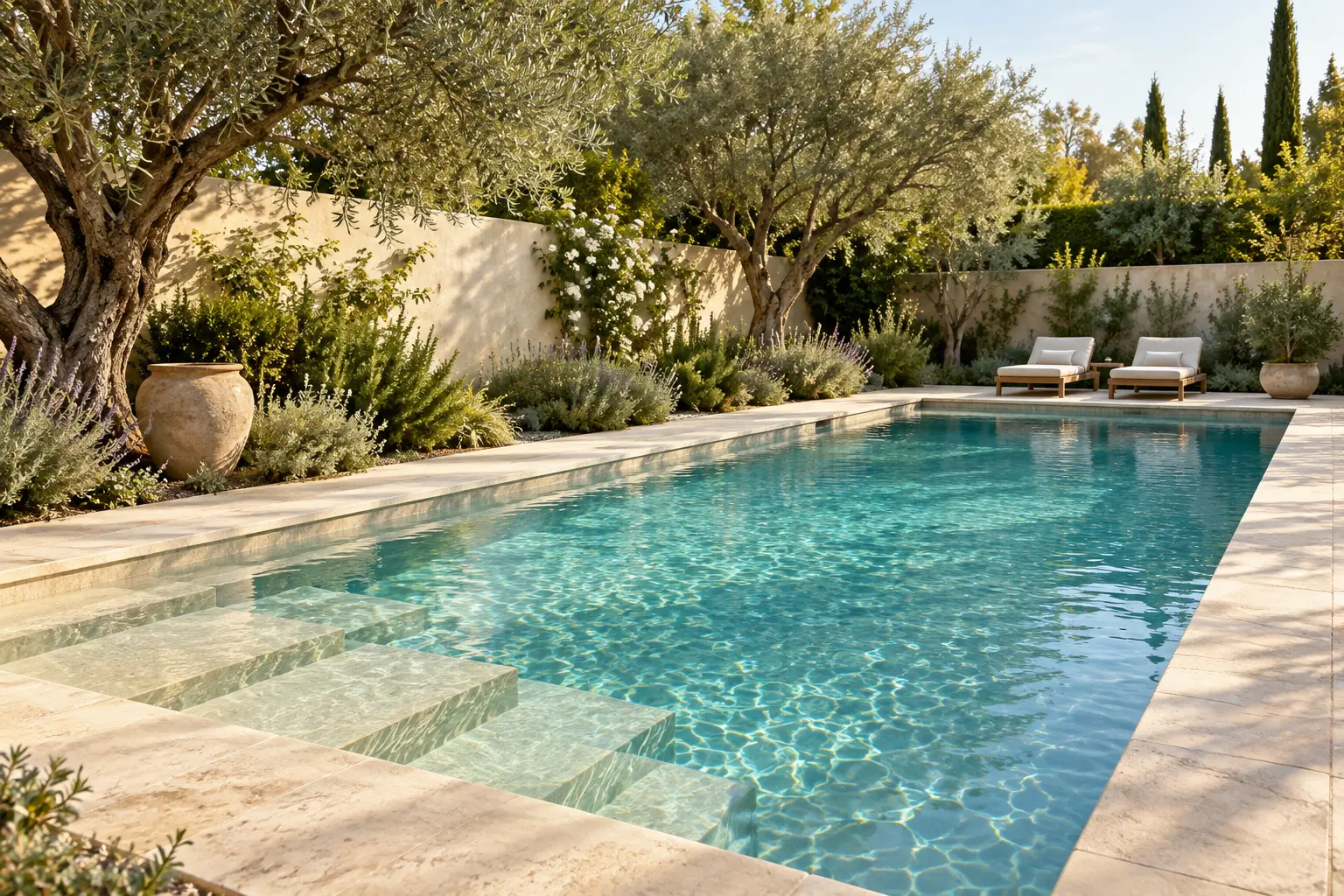
Begin by deciding whether you are building a new pool, changing an existing one or reworking the yard around it. Those are different scopes and different budget conversations. A finish change does not automatically include coping, deck replacement or equipment, even when a proposal uses the broad word remodel.
Identify interior finish, waterline tile and coping separately. Ask which existing parts will be retained and how adjoining areas will be protected or repaired. Have any reported defects assessed rather than expecting a cosmetic selection to resolve an unknown condition.
Changes to equipment, features or the pool itself need a coordinated assessment. Give each item its own place in the proposal. Ask the project team to explain compatibility, approvals and the effects on adjacent work before treating several upgrades as one package.
Consider the pool, equipment, barriers, deck and garden together. Include construction access and restoration. The new-pool ranges above are not a price for resurfacing an existing pool or a promise that every surrounding feature is included.
Published planning references, checked October 16, 2026. These are not WAO quotes. Photographs do not show what a listed budget buys.
Simple pool package; the low end can represent a smaller or different pool type.
Broader finishes, equipment and deck scope, subject to site conditions.
More elaborate pool, spa or feature packages.
These 2026 Los Angeles planning ranges are for new pools, not resurfacing or remodeling. Confirm barriers, engineering, permits, utilities and yard restoration. Do not infer a pictured pool's size or price from its photograph.
For a remodel, separate interior finish, waterline tile, coping, deck and equipment. Wanting one replaced does not automatically put the others in scope.
Coping caps the pool edge. The deck is the wider area around it. Ask the builder to mark both so the written proposal refers to the same physical areas.
Discuss safe access, equipment service, storage and landscape restoration with the project team. Ask them to identify the safety and approval requirements for your property.
Coping is the cap along the pool edge. The pool deck is the wider area used for walking, sitting and moving around the pool. Waterline tile and the interior finish are separate surfaces again. Walk the project with the builder and ask them to mark the exact work boundary for each item on a plan. Keep those names consistent in the proposal.
Pay particular attention to phrases such as affected paving, make good or pool surround. Ask which physical area they describe, what gets removed and what replaces it. A marked photograph can help discuss intent, but exact area quantities need measurements or a scaled plan. Do not infer square footage from a perspective image or treat a decorative outline as a survey.
Consider the ordinary routes between the house, seating, equipment and storage. Think about where wet towels go, where someone supervises from and how maintenance reaches the equipment without moving the whole garden. Discuss access needs and safety with the project team. The required protections and approval path must be established for the actual property and work.
For an existing pool, ask the contractor to explain the sequence, downtime and return-to-use process rather than attempting draining, equipment changes or restart yourself. Include startup, operating instruction and the responsibility for any adjoining landscape or deck repairs. A pool that looks finished is not the same as a fully handed-over project.
Imagine two remodel proposals that both mention new coping. One also describes removing and replacing a measured deck area; the other only refers to repairing affected paving.
Keep coping and pool deck as separate lines. Mark where deck work ends, state the measured area and explain whether removal, disposal, preparation and replacement are included.
The difference becomes a defined scope question. It is not a reason to assume that either contractor is wrong or to invent a price for missing work.
State new pool or remodel, record the desired changes and distinguish reported problems from appearance preferences. List pool, equipment and yard work separately.
Have the qualified team assess the site and existing conditions, develop the required design and identify approvals and safety requirements. Confirm measurements before using area-based figures.
Agree access, protection, material selections and work boundaries. Ask who handles removal, service interruptions, inspections and restoration around the pool.
Confirm required closeout records, startup and operating guidance. Review the deck, equipment and restored areas as well as the pool, and document any unfinished work.
Use these points to identify gaps, not to diagnose the building or certify a contract. If something is not stated, ask for clarification rather than assuming it is included or excluded.
For California contract essentials, consult the CSLB homeowner checklist alongside your project-specific scope.
Bring what you know and leave the rest open. This list helps start a conversation; you do not need a complete specification or a firm budget before asking for help.
Which parts of the pool and yard are included, and can you mark where each part of the work ends?
Ask for the answer in writing and keep it with the same version of the plans and selections.
Tell us whether you are planning a new pool or updating an existing one. Include what you would like to change around the water, such as the deck, shade or access to the house.
Our team will discuss your priorities and confirm whether we can help with the next step before any contractor appointment is arranged.
By We Are One editorial desk. Budget ranges are planning references, not property-specific quotes. Local requirements and project suitability need property-specific confirmation. A guide listing is not a promise of contractor availability.