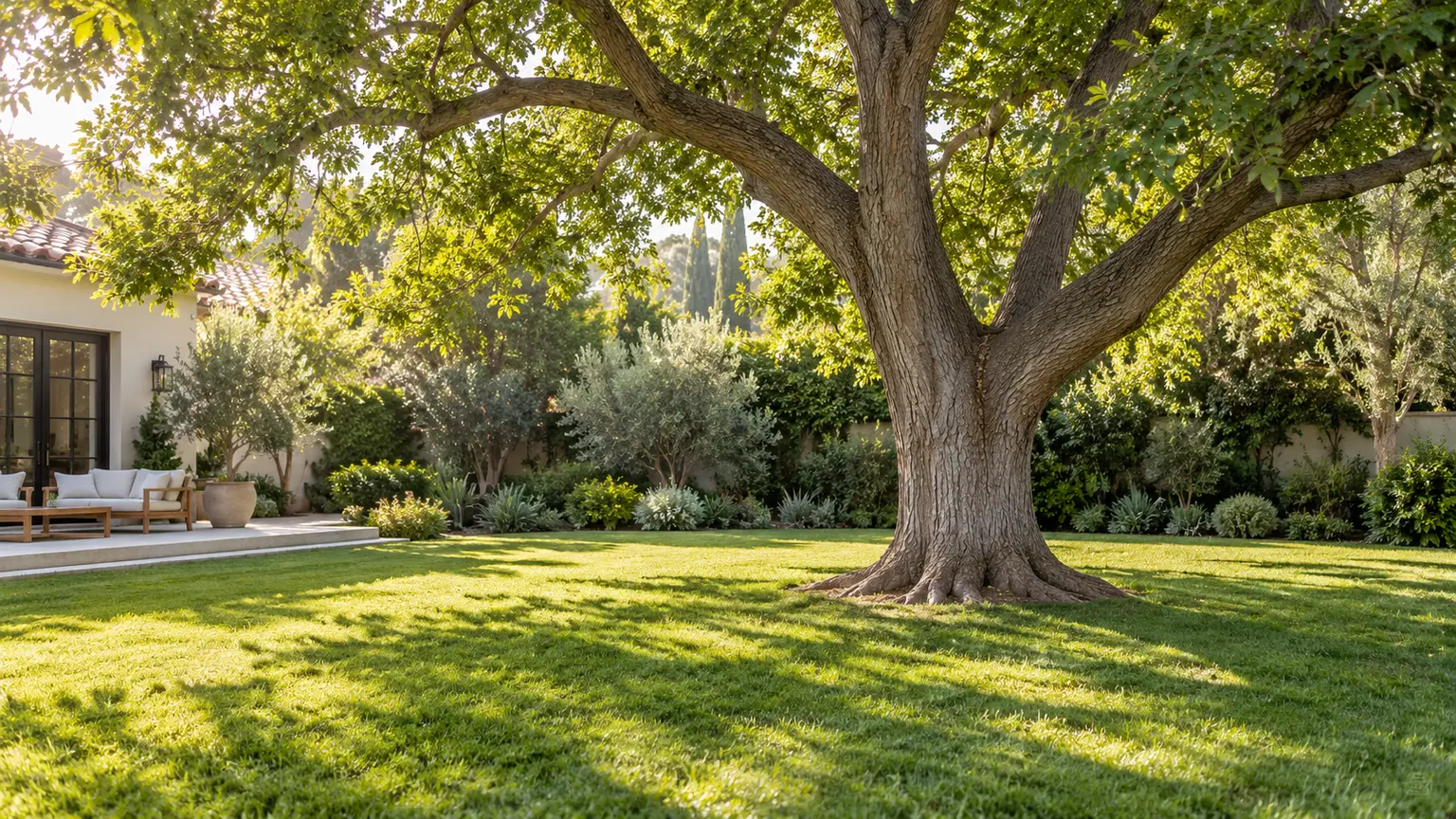
The grass is leaving. The tree is staying. Before you switch off the lawn sprinklers, find out whether they have also been supplying the tree you want to keep.
A lawn conversion changes more than the view from the kitchen. It can change how water reaches an established tree and what happens to the ground around it during construction. A planting plan that names the new shrubs but leaves the existing tree out of the irrigation conversation is unfinished.
The answer is not to keep watering everything as though the lawn were still there. It is to identify the tree, understand its current conditions and agree on appropriate care before, during and after the change. That leaves room for both ambitions: less lawn and a garden that still benefits from established shade.
General planning guidance, not a watering schedule or tree assessment. Tree species, condition, soil, drainage and local conditions determine the appropriate care.
Watch the story
Loading the film connects to YouTube. Google’s privacy policy applies.
A lawn sprinkler may be doing two jobs
Imagine a backyard with one established shade tree in the lawn. The homeowner wants to replace the grass with a planted garden and keep the canopy that makes the terrace pleasant. The existing sprinkler circuit is labeled lawn. That label describes the controller setting, not every plant whose roots may receive the water.
Utah State University Extension identifies a sudden loss of irrigation as one of the risks to trees during lawn removal. It also warns that decline may become apparent later. A tree that looks much the same immediately after the work is therefore not proof that its needs have been addressed.
Before the old circuit changes, ask the irrigation professional to show which outlets it serves and how the retained tree will be accounted for. Photograph the existing arrangement and save the current settings as a record. Those settings are background information, not an instruction to preserve a lawn schedule indefinitely.
In our example, the first useful addition to the plan is a question beside the tree: how is it being watered now, and what replaces that arrangement if it changes? That is more useful than simply writing tree to remain.
If the tree's shade is part of the reason you are keeping it, observe where and when you use that shade before changing the surrounding layout.
Planning reference: Utah State University Extension: preserving trees during and after lawn removal.
Identify the tree before choosing its new routine
Two mature trees can need different treatment. Species, condition and growing history matter. So do the soil, drainage and exposure around them. Ask an appropriately qualified arborist to assess uncertainty rather than choosing a schedule from a photograph or the word mature.
UC Integrated Pest Management explains that both too little and too much root-zone moisture can cause problems. Its irrigation guidance ties watering decisions to the plant and site. This is why a universal instruction such as run drip for twenty minutes cannot do the job: the system's output and the conditions underneath it are still unknown.
California native oaks deserve particular care in this conversation. UC Master Gardener guidance says established urban oaks often need little or no supplemental irrigation and warns about frequent summer watering. Do not treat lawn removal as a reason to add water indiscriminately around an oak. Its species and circumstances need to guide the plan.
For the homeowner, the practical task is to get the tree identified and its needs written into the same design discussion as the new planting. You are not expected to diagnose its health or calculate irrigation from its canopy.
Planning reference: UC IPM: irrigation of trees and shrubs.
Planning reference: UC Master Gardeners: oaks in the home landscape.
Keeping the trunk is not the whole protection plan
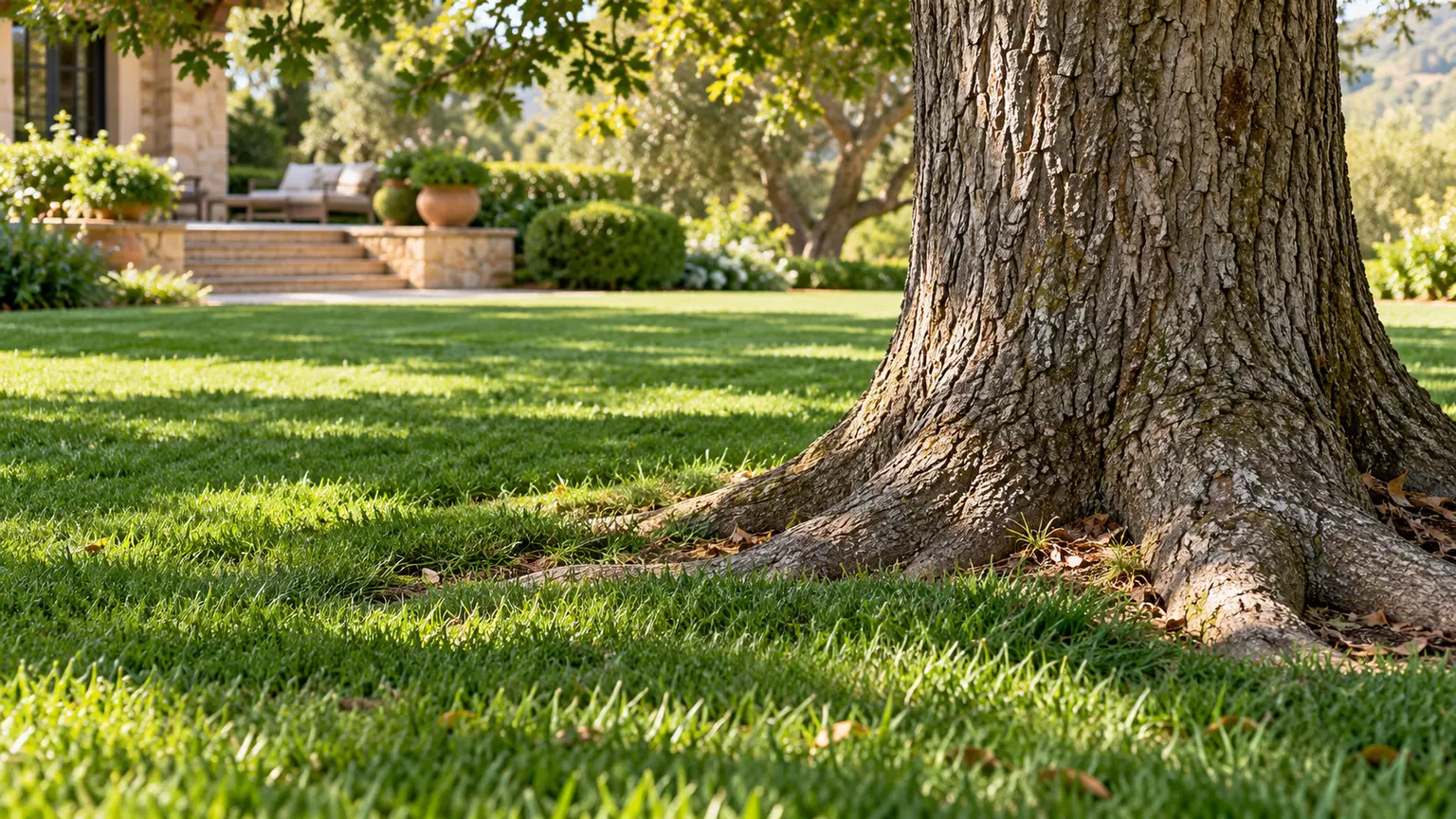
Lawn removal itself can affect the tree. Roots may be damaged during excavation, while equipment and material storage can compact soil. Utah State University Extension identifies these risks alongside irrigation changes. Leaving the trunk untouched does not settle how the work should proceed nearby.
Ask the project team how the removal method, access and storage will be coordinated with tree protection. If a new irrigation line, edging or path is proposed, include that work in the discussion. Do not mark a convenient circle around the trunk and assume everything outside it is clear to dig.
The California Water Efficiency Partnership's lawn-conversion guidance recommends planning tree protection and irrigation together, with appropriate arborist and irrigation expertise. Its advice includes controlling construction traffic and disturbance. The relevant protection area and work method still need to be established for the actual site.
For our backyard, the drawing now needs more than the future planting shapes. It needs the agreed work limits and access arrangements, plus a named person to contact if the crew encounters something unexpected. Resolve those responsibilities before removal starts.
Planning reference: Utah State University Extension: lawn-removal risks to retained trees.
Planning reference: CalWEP: tree-care best practices during lawn conversion.
New planting and an old tree are not one watering problem
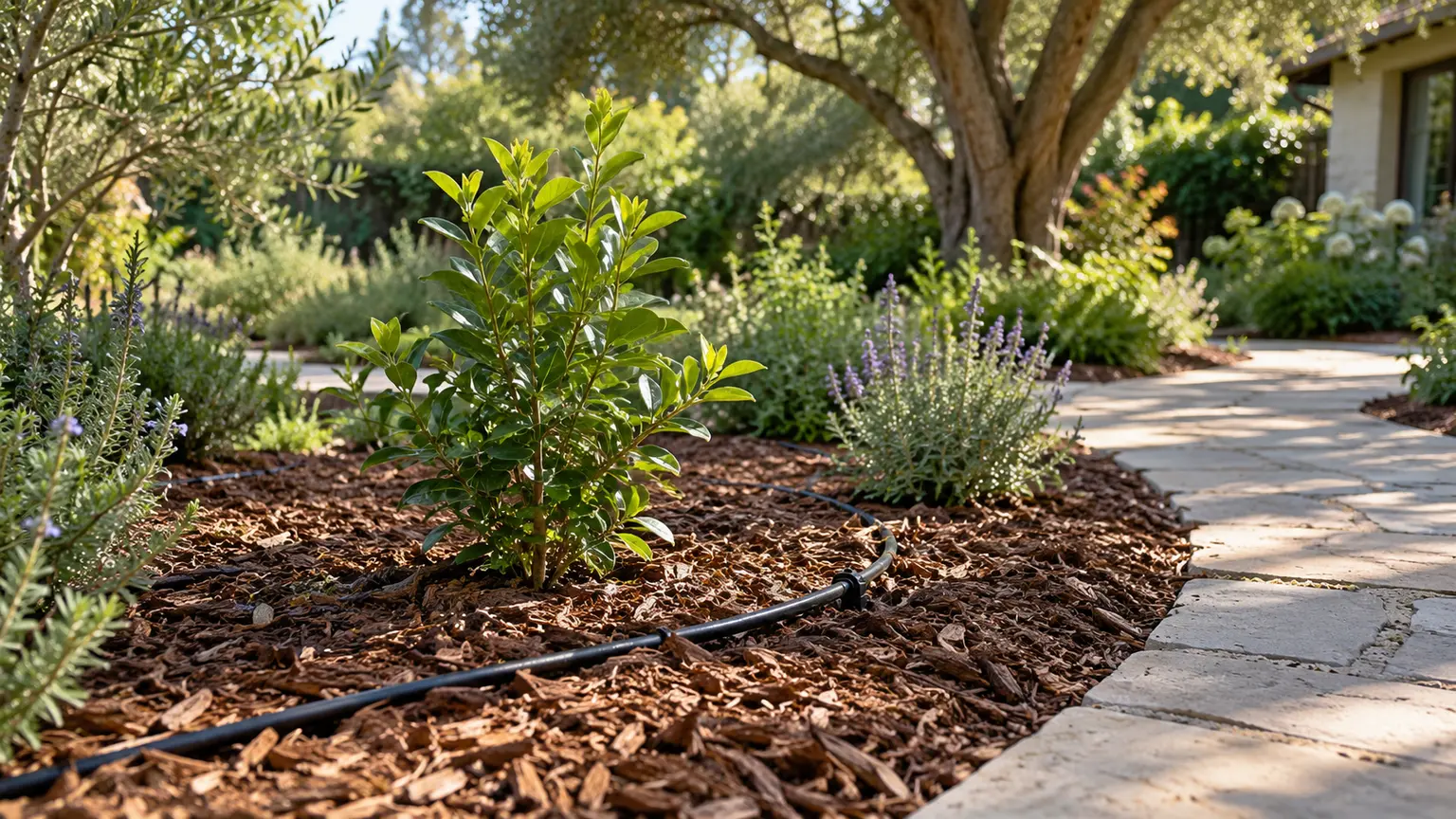
The replacement garden introduces another question. Newly installed plants need care while establishing, even when they are selected for lower water use later. UC's landscape horticulture guidance makes that distinction explicit. A drought-tolerant label does not mean a new plant can be left without an establishment plan.
The California Department of Water Resources recommends grouping plants with similar water requirements and evaluating the existing irrigation system during a lawn conversion. Ask the designer how the retained tree and new planting will be served and controlled. Different needs may call for separate arrangements; the answer belongs in the design, not in a guess about which emitter looks sufficient.
In our example, the homeowner asks the team to distinguish two jobs: care for the retained tree and establishment of the new garden. Who sets each arrangement? Who checks that it works? What should be reviewed as the planting establishes and the seasons change?
A hose or drip line in a photograph cannot answer those questions. Nor can the lawn's old controller label. The useful handover explains what was installed, what it serves and who will adjust it.
Planning reference: UC landscape horticulture: drought and water-conservation questions.
Planning reference: California DWR: planning irrigation when removing a lawn.
Give the tree a place in the handoff
Use this note to start the conversation with your landscape designer, arborist and irrigation professional. Ask them to correct and complete it for your property. It is a planning record, not a substitute for their assessment or drawings.
We are removing the lawn and retaining this tree. Before work starts, please confirm its identification and care needs, how the current irrigation serves it, and the arrangement during the change. Please also show the agreed protection measures, how the new planting will be watered, and who checks and adjusts the completed system.
Keep the completed note with the planting and irrigation information. At handover, ask for a demonstration of the actual controls and outlets rather than accepting a general statement that drip has been installed. Agree on follow-up and the contact for concerns. Do not wait for visible decline to discover that everyone assumed someone else was responsible.
If the lawn conversion is one stage of a larger remodel, plan the connections between backyard phases so tree care and protection continue through the gaps.
Keep the canopy in the plan, not just in the picture
The new garden can look different without treating the established tree as an afterthought. In our example, the homeowner now has a clearer brief: remove the lawn, retain the tree, protect the ground during work and provide an appropriate watering and care handoff.
That is the decision to make before the sprinklers change. If the lawn conversion is part of a larger backyard remodel, bring the retained-tree note into the wider design conversation alongside access, planting and the places you want to sit. The shade you already enjoy is part of what you are planning to keep.
For the wider renovation conversation, use the outdoor-living planning and pricing guide alongside the site-specific tree-care advice.
 A little inspiration to take home.