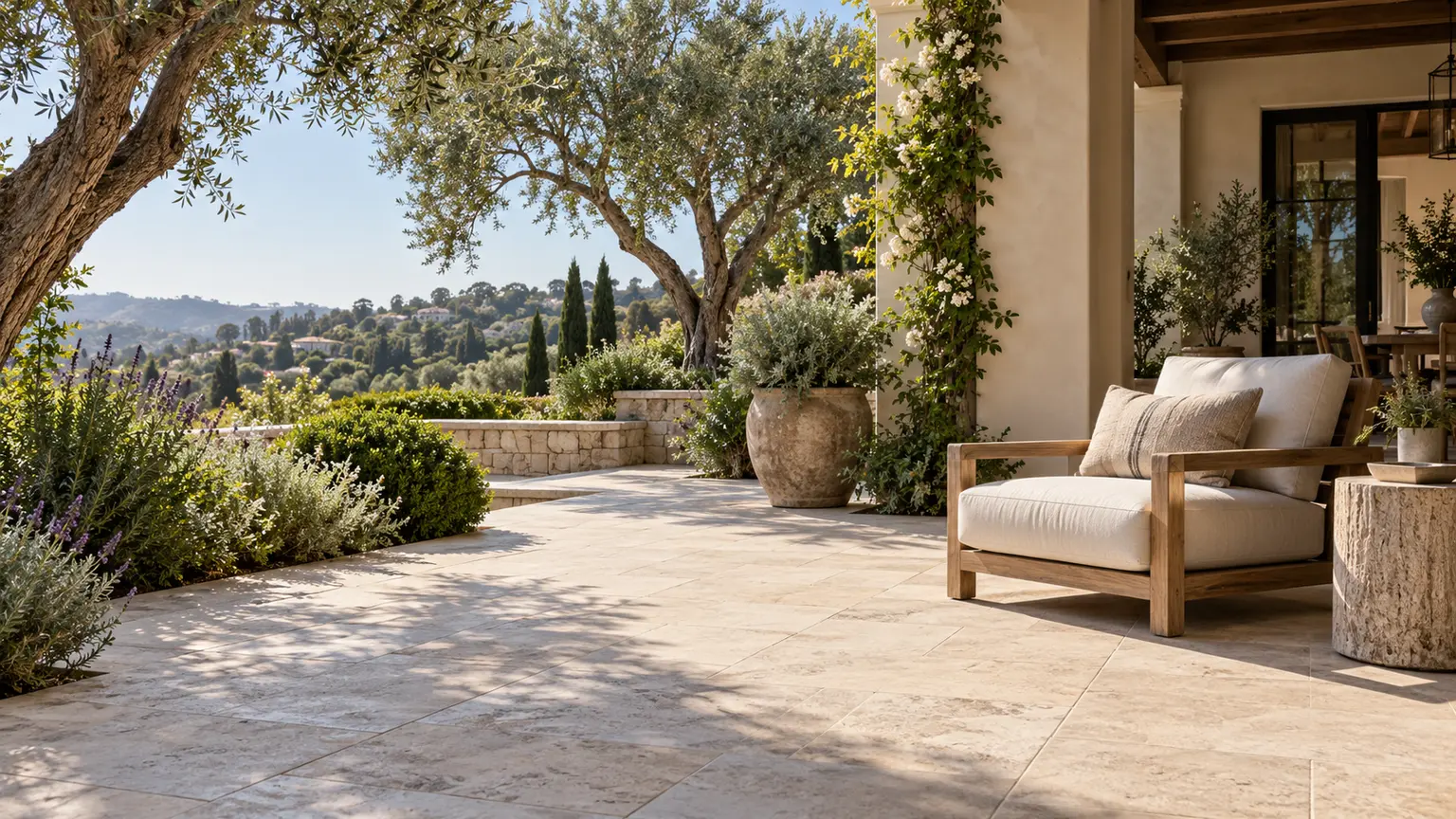
You are choosing the patio finish, and the pale sample seems like the sensible summer choice. Less heat underfoot, a lighter garden, perhaps a more comfortable place for lunch. But those are three different promises. One material description cannot settle all of them.
A paving surface that absorbs less sunlight can stay cooler. That does not, by itself, tell you how comfortable the chair above it will be. The person sitting there experiences direct sun, reflected sunlight and heat exchanged with the surrounding surfaces, as well as air movement and air temperature. Brightness adds another question: is the view comfortable to look at?
You do not need to become a heat specialist to make a better selection. You need to separate what a product claim demonstrates from what the whole patio needs to do.
A homeowner selection guide. Research on road coatings does not predict a particular patio material or temperature.
Watch the story
Loading the film connects to YouTube. Google’s privacy policy applies.
What is actually cooler?
Start by identifying the quantity being discussed. A surface-temperature comparison describes the paving. An air-temperature reading describes the air at a particular location. Neither is a complete measure of how the setting feels to a person.
Solar-reflective paving sends more incoming sunlight away rather than absorbing it. Berkeley Lab describes this as one way to reduce pavement heating. That can be a useful benefit. It is not a reason to dismiss lighter finishes, and it does not make every light-colored product equivalent.
The next question is where that reflected energy goes. Research on reflective road coatings in Phoenix found cooler surfaces while also recording higher midday radiant exposure for pedestrians in some conditions. That is evidence that the quantities can move in different directions. It is not a finding that every pale patio paver makes people hotter.
Road coatings, street geometry and a residential terrace are different settings. We cannot use that study to give your selected stone a temperature or rank it against porcelain. Its useful lesson is narrower: a cooler surface is only one part of the comfort conversation.
Planning reference: Berkeley Lab: Cool Pavements.
Planning reference: ASU: Cool Pavement Pilot.
Planning reference: King et al., Beyond Surface Cooling, 2026.
Heat and glare need separate answers
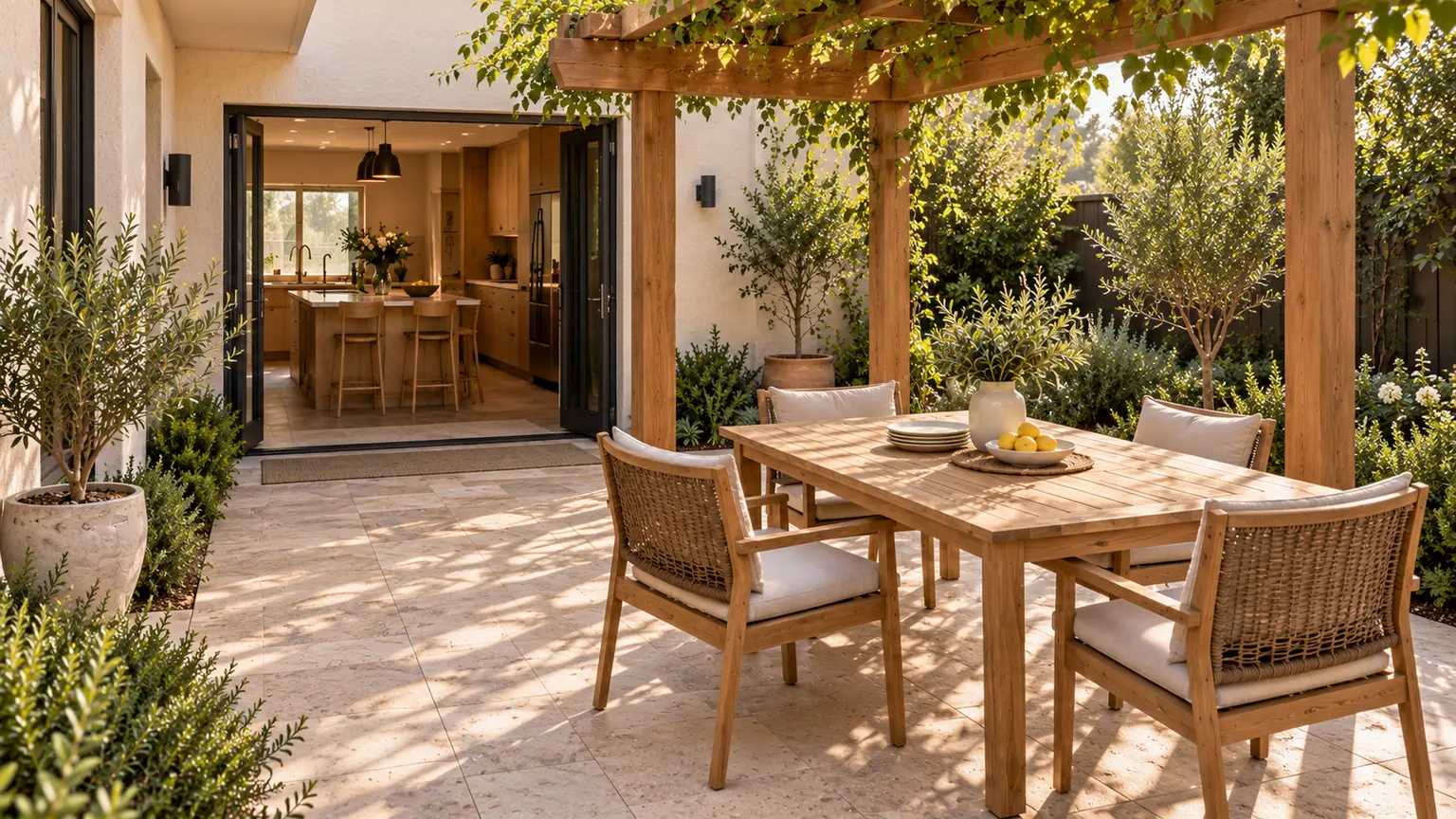
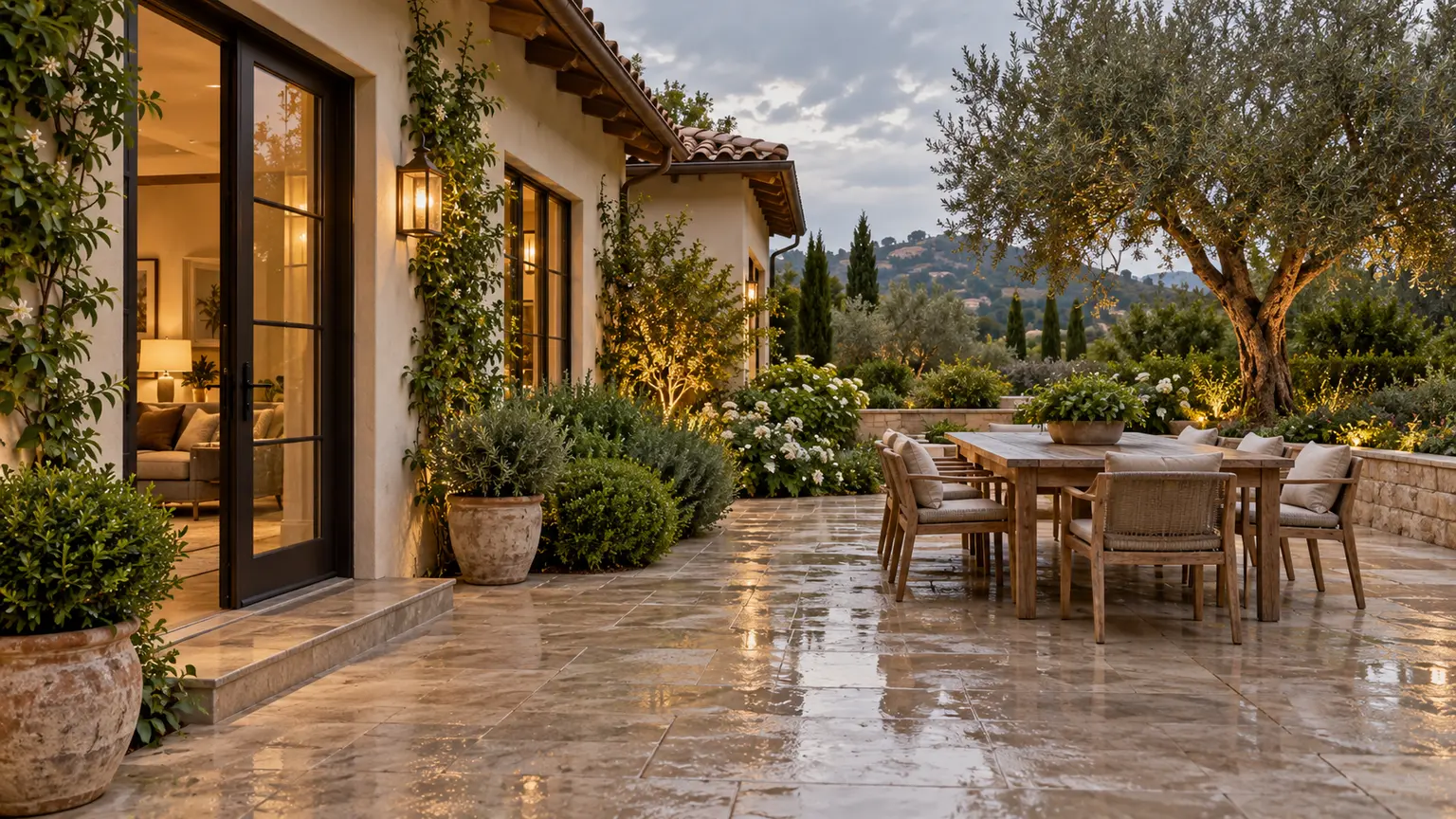
Imagine a terrace with pale paving, a shaded chair and an open view across the garden. You might like the material in a sample display but find the expanse of paving visually bright from the chair. That observation concerns glare. It is not a measurement of the heat reaching your body.
Equally, a surface that looks comfortably muted has not proved that it stays cool in the sun. Color, surface finish and the actual product matter, but appearance alone cannot answer every performance question.
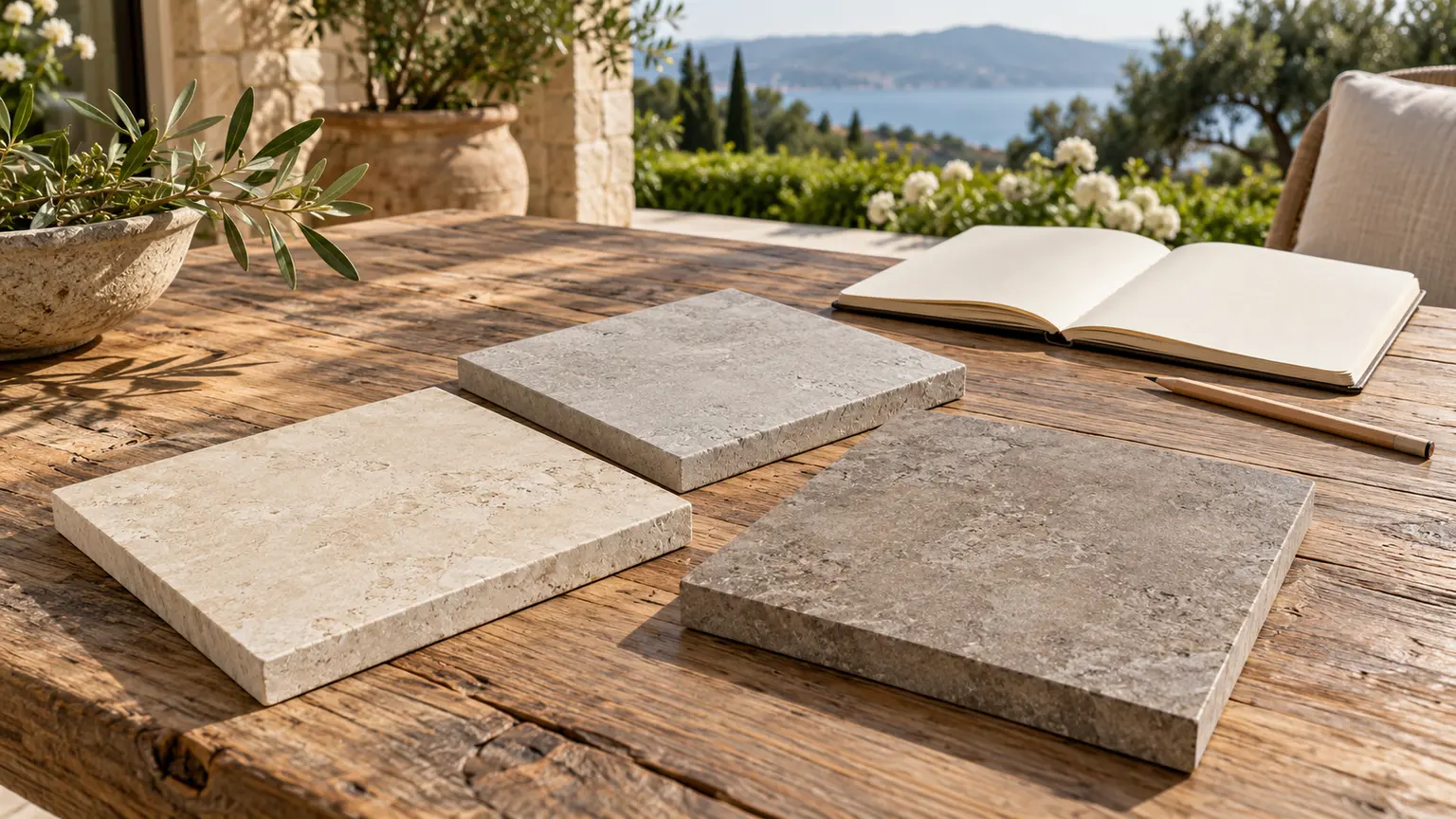
Ask to see the exact finish outdoors. Where practical, view an installed area rather than only a small piece held upright indoors. Look from a seated position and toward the part of the paving that would fill your view. Note whether you find the reflection uncomfortable, and under what daylight conditions. You are checking your visual preference, not conducting a thermal test.
Keep those observations attached to the product and finish. Do not conclude that every pale paver is too bright because one polished sample bothers you, or that every darker finish solves the problem. A different finish may change the shortlist without settling the heat question.
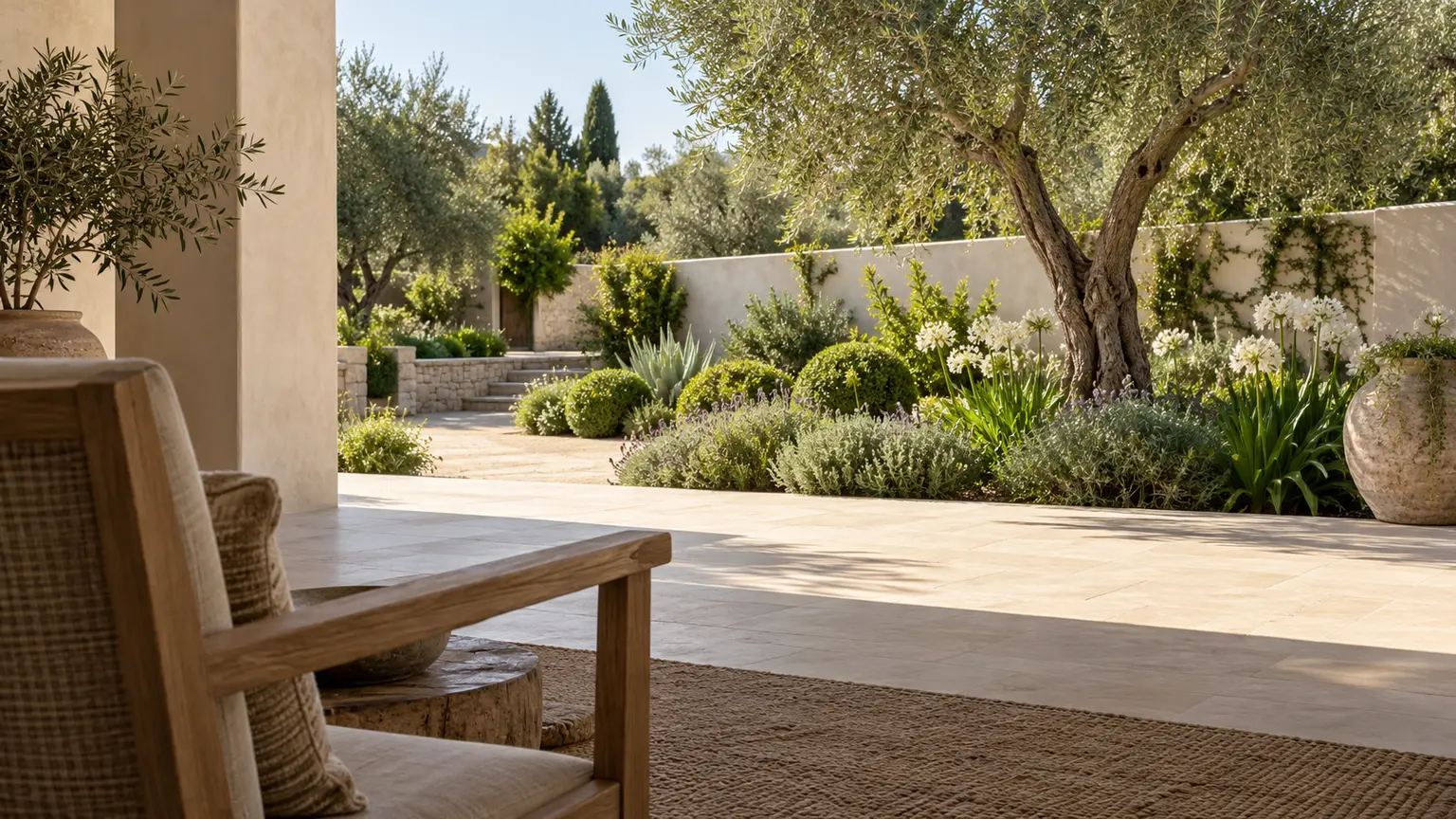
Ask what supports the material claim
When a supplier describes a finish as cooler, ask: cooler than what, and measured how? Useful information names the exact product, the comparison surface and the test conditions. A number without its context is difficult to use.
For example, a comparison made under one set of sun, wind and moisture conditions does not promise the same surface temperature on your patio. A solar-reflectance value also answers a different question from a surface-temperature measurement or a person's comfort assessment.
The EPA notes that cool pavements do not have a single official labeling standard or certification in the way the term might suggest. Treat the label as the start of a conversation about evidence. It is not a complete specification for your outdoor room.
Keep the answer specific. Record the product name, color, surface finish, claimed benefit, supporting information and its limitations. If the available evidence does not establish seated comfort or safe barefoot contact, leave those questions open. Do not use a barefoot trial on hot paving to fill the gap.
Planning reference: EPA: Cool Pavements.
Design the occupied space along with the surface
Return to the terrace rather than the sample rack. Where will people sit? What sunlight reaches them directly? What surrounds that position? A paving selection and a shading strategy should be reviewed together, even though they answer different questions.
Shade can reduce direct solar exposure; it does not make every other influence disappear. Nearby surfaces, reflected sunlight, wind and the time of use still belong in the discussion. Trees and vegetation can contribute to cooling, but their suitability and placement require their own site-specific decisions.
Our backyard shade guide covers the separate task of checking seats, hours and seasons. Use that record alongside your paving information. You do not need to repeat the whole shade exercise for every sample; you need to avoid asking the material to solve a problem that belongs to the layout.
In our terrace example, the homeowner now has two useful records: what is known about the shortlisted finish, and what the sitting area needs. The designer can consider them together instead of treating the palest sample as a complete comfort plan.
For the separate shade question, plan around seats, hours and seasons. Keep that record alongside the material information.
Planning reference: EPA: Trees and Vegetation.
A better paving comparison
Use the same questions for each shortlisted product:
This is a decision record, not a scorecard that declares the lightest or darkest option the winner. One finish may remain attractive after those questions. Another may need a different seating or shading arrangement. The useful result is knowing why an option belongs on your shortlist.
For the wider project scope and budget, use our outdoor-living planning and pricing guide. A photograph does not establish a project price.
Send this with your shortlist
“We want to choose paving for a comfortable sitting area, not surface temperature alone. Please identify the exact product and finish, the evidence behind any cooler-surface claim, and the conditions of that comparison. We would also like to review its appearance from the seating position and consider reflected sunlight, direct sun and the shading plan together. Please keep any unverified comfort or barefoot-temperature claims explicit.”
The best choice is not necessarily the brightest sample or the one with the strongest cooling headline. It is a finish whose appearance you enjoy, whose claims you understand and whose place in the whole patio has been considered.
 A little inspiration to take home.