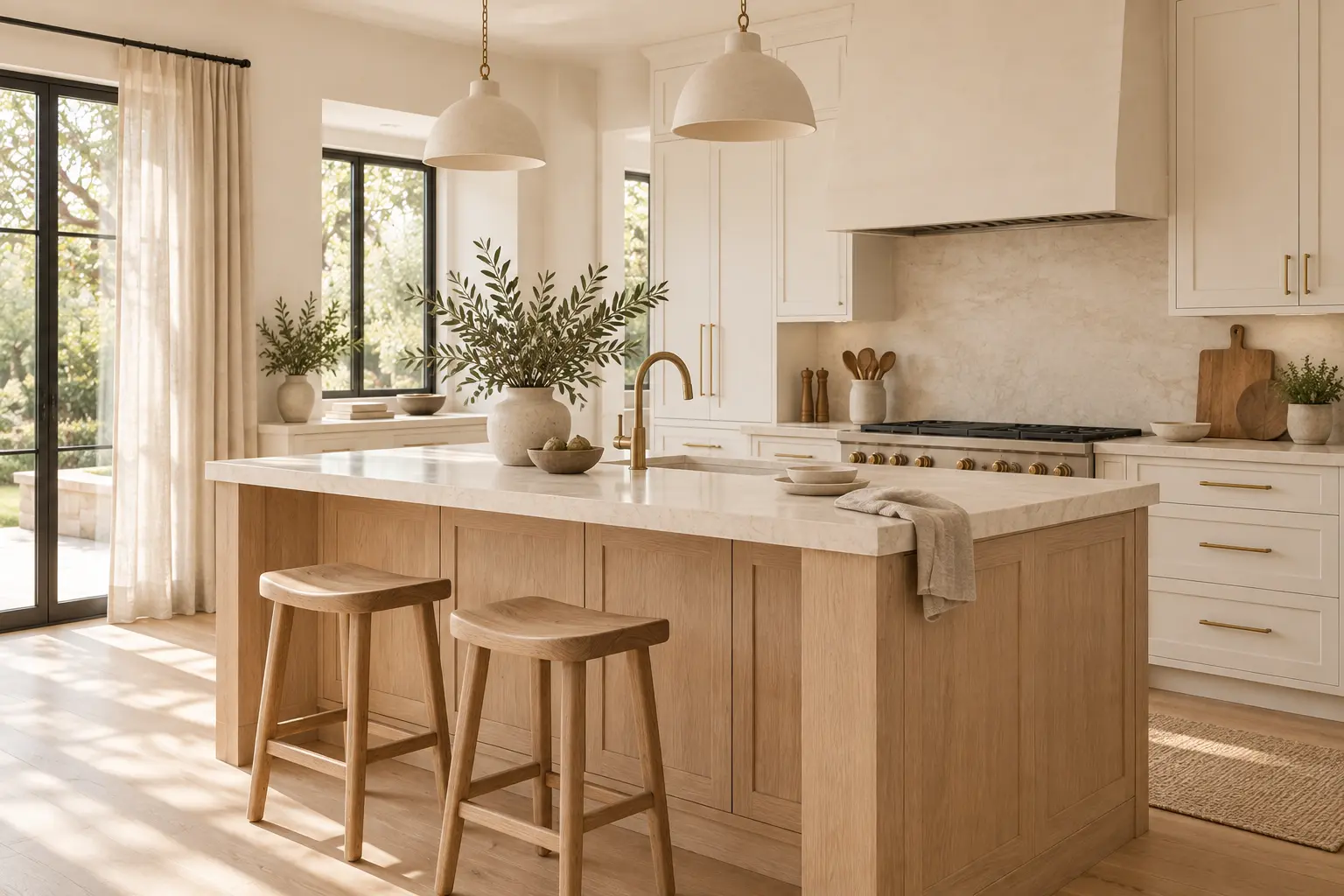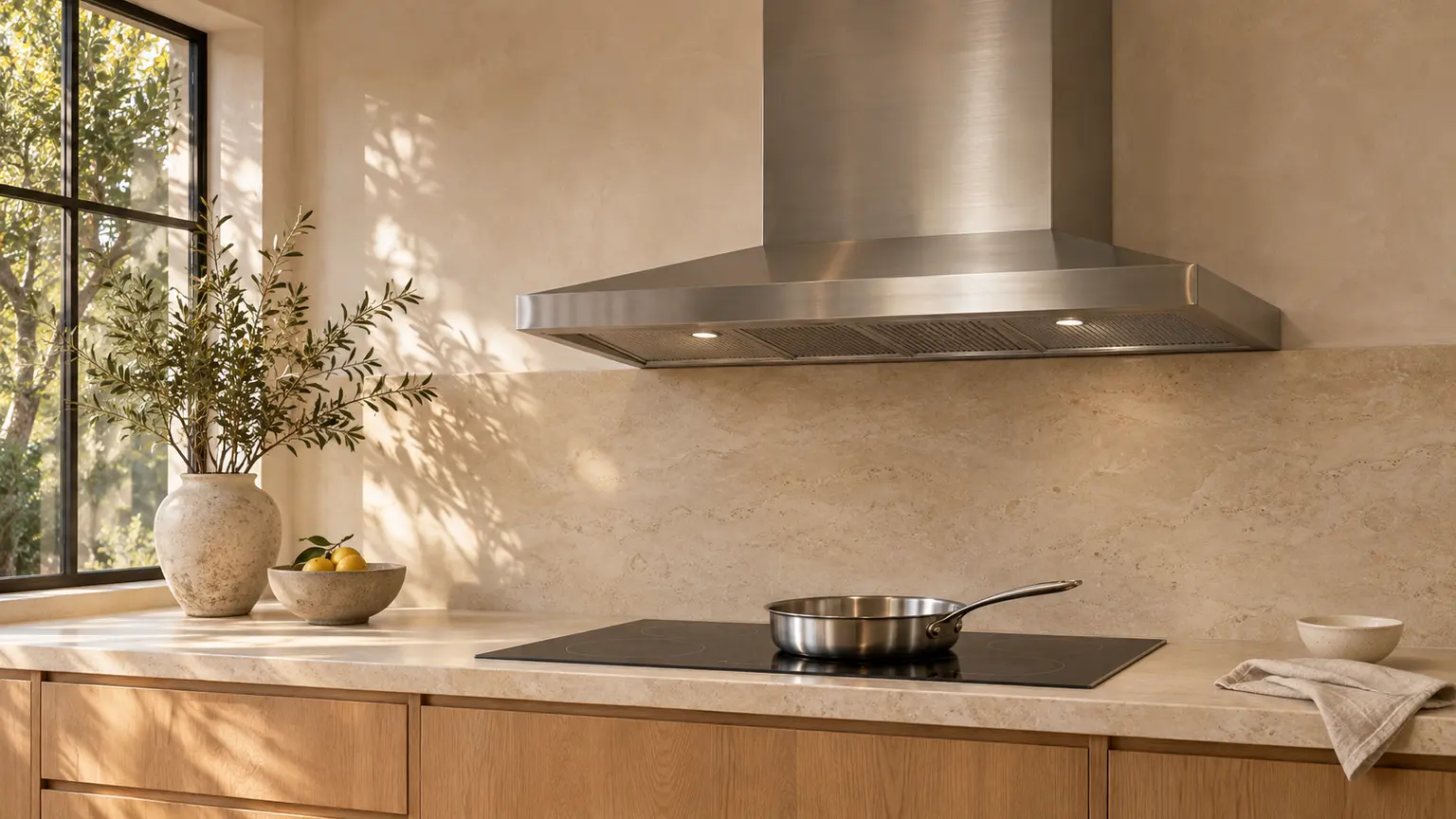
You can spend an evening comparing range-hood specifications and still miss the most revealing view: the kitchen from the side.
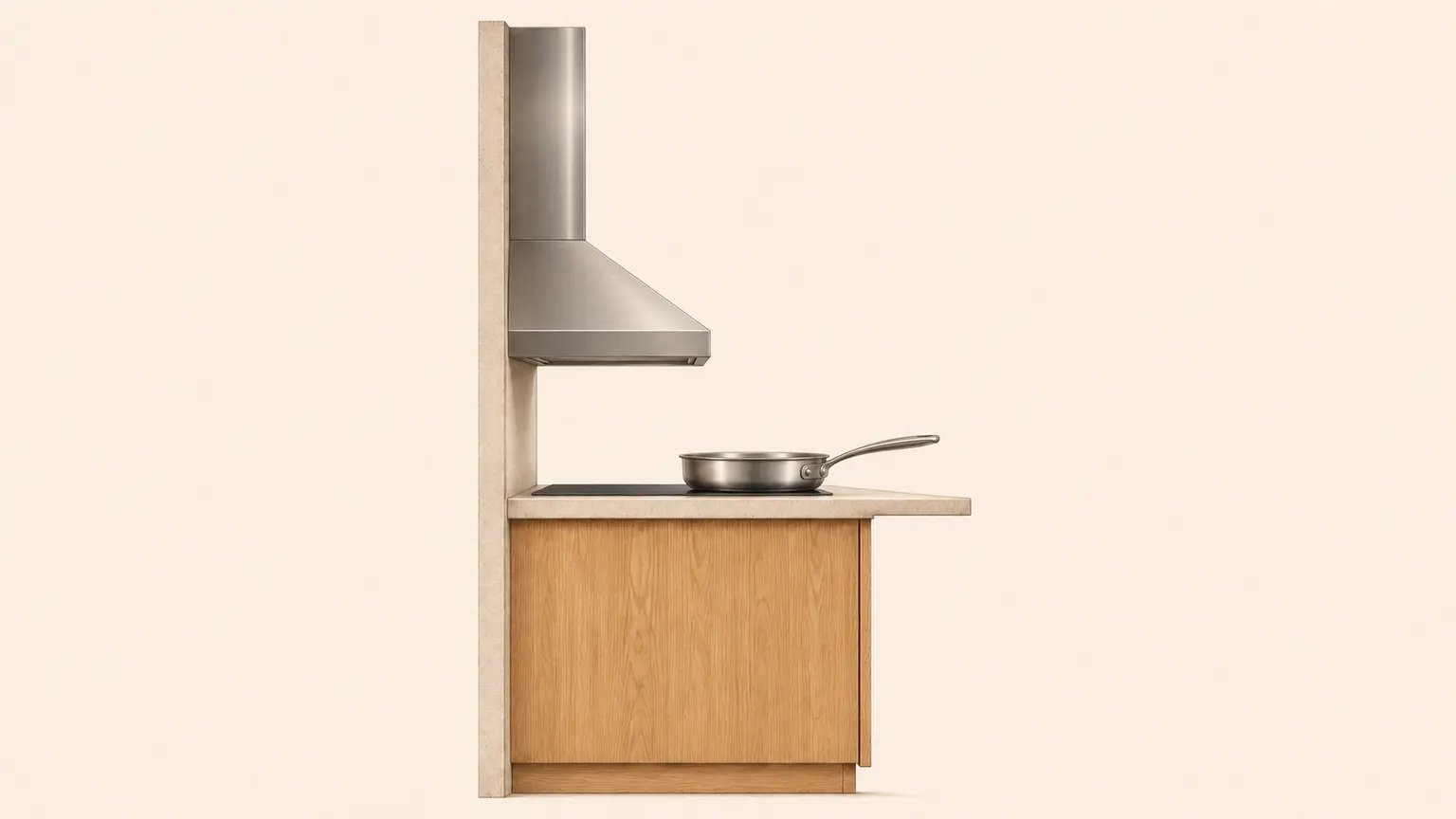
In that view, the front pan may sit partly beyond the hood above it. The fan can be running, the kitchen can look beautifully finished, and the relationship between those two objects can still deserve a closer look.
Before ordering a hood or closing up the cabinetry, ask your project team to review the exact cooktop, hood geometry, installation height and duct route as one arrangement. More airflow can help capture, but the largest number on a product page is not a complete ventilation plan.
A homeowner planning guide. Appliance instructions and applicable requirements govern the installation.
Watch the story
Loading the film connects to YouTube. Google’s privacy policy applies.
Follow the pan you actually use
Think about the pan that comes out most evenings. Where does it sit? If your largest or favorite cooking position is at the front, put that position in the conversation rather than describing the appliance only by its overall width.
Berkeley Lab's 2012 assessment of seven residential exhaust hoods found that capture varied with the hood, airflow and burner position. Back burners generally had better capture than front burners in those tests. Coverage was part of the explanation: many of the tested hoods covered only part of the front cooking positions.
That finding does not give every current hood a performance score. It tells you why the side view matters. Two products that fit the same width of opening can have different depths and collection shapes. The front elevation your kitchen designer uses to align cabinet doors may not reveal that difference.
Ask to see a side section showing the actual appliance and proposed hood, with the front cooking position marked. Keep the hood's specified installation range attached to that drawing. A sketch helps expose questions; it does not establish capture efficiency or override installation instructions.
Planning reference: 2012 assessment of seven residential exhaust hoods.
What the airflow number leaves unanswered
CFM means cubic feet per minute: a volume of air moved over time. Capture efficiency asks a different question: how much of what the cooking produces is collected and exhausted.
Those measures are related, but they are not interchangeable. In Berkeley Lab's 2020 testing of over-the-range microwave hoods, capture generally improved with airflow and was higher at the back cooking positions. The tested microwave hoods also fell within the performance range of the standard hoods used for comparison. An appliance category alone was not a reliable verdict.
So avoid replacing one shortcut with another. A deeper-looking hood is not automatically the winner, and a microwave combination is not automatically disqualified. Look for performance information for the exact model, then have the proposed installation reviewed.
The HVI certified directory is one place to check model-specific certified ventilation data. Keep the model number, fan setting and stated test conditions with the figures you collect. A maximum airflow figure and a sound rating at a different setting do not describe one operating condition.
Planning reference: Berkeley Lab's 2020 testing of over-the-range microwave hoods.
Planning reference: HVI certified directory.
Draw the route beyond the beautiful hood
A sculpted plaster surround or metal chimney can conceal very different arrangements. Confirm whether the selected unit exhausts outdoors or recirculates air into the room. The visible enclosure does not answer that question.
For a ducted system, ask the team to show where the duct goes and where it terminates outdoors. The Department of Energy's kitchen exhaust retrofit guide emphasizes manufacturer-specified duct sizing, a short direct route, smooth metal ducting and verification of airflow. Bends, restrictions and the actual installation deserve attention alongside the fan selection.
This is a particularly useful conversation before a cabinet order. If the intended route conflicts with structure or services, changing the hood's appearance will not settle it. Ask who is checking the route, applicable local requirements and any makeup-air provision the system needs. Do not assume that a nearby window is a designed solution.
You do not need to design that system yourself. You need to know that someone has reviewed the whole route, rather than leaving an attractive enclosure with an unresolved connection behind it.
Planning reference: kitchen exhaust retrofit guide.
Would you use the setting you are comparing?
Listen to the proposed hood at a showroom if a suitable demonstration is available. Ask which setting is running and whether the display is actually ducted. A showroom impression is useful, but it is not a prediction of the sound in your finished kitchen.
Noise belongs in this decision because it affects everyday use. In Berkeley Lab's interview on range-hood use, researcher Brett Singer identifies noise as one reason people avoid running their hoods and recommends selecting a unit they will use. The interview also emphasizes exhausting outdoors and considering coverage of the front burners.
Now bring comfort into the side view as well. A hood that projects farther into the room may change how it feels to stand at the cooktop. Review head clearance and access with the designer within the installation limits for the exact appliances. Do not solve a headroom concern by casually raising the hood beyond those limits.
For the wider room brief, start with the way you use your kitchen every day. Then bring this appliance relationship into the drawing.
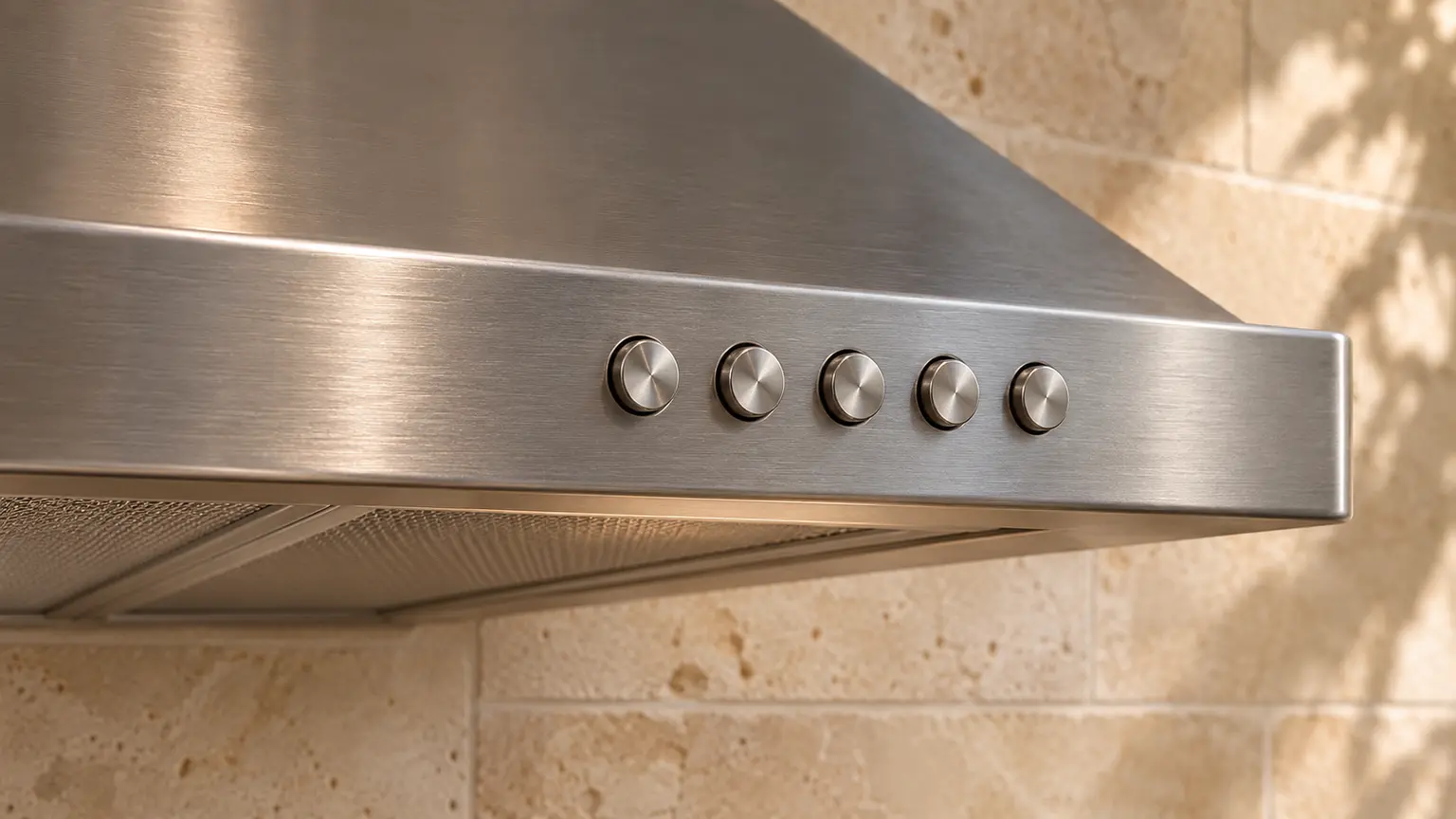
Planning reference: Berkeley Lab's interview on range-hood use.
Take one useful record to the appointment
Keep these answers together rather than comparing isolated product screenshots:
The record is not a product scorecard. An unanswered field is a question for the supplier or installer, not a reason to invent a rating. If the route remains uncertain, ask what must be checked before the cabinet and appliance orders are finalized.
Planning the wider scope and budget? Read our kitchen renovation guide alongside the appliance selection record.
Send this with your shortlist
Please review this cooktop and range hood together before we finalize the cabinetry. Can you show the front cooking position, hood depth and permitted installation height in a side section, confirm the duct route and outdoor termination, and identify the airflow and sound information for the settings we would use? Please also confirm who will check applicable requirements, makeup air and the completed installation.
The best-looking hood in the room still has a job to do. Give that job a place on the drawing before the drawing becomes a finished kitchen.
 A little inspiration to take home.