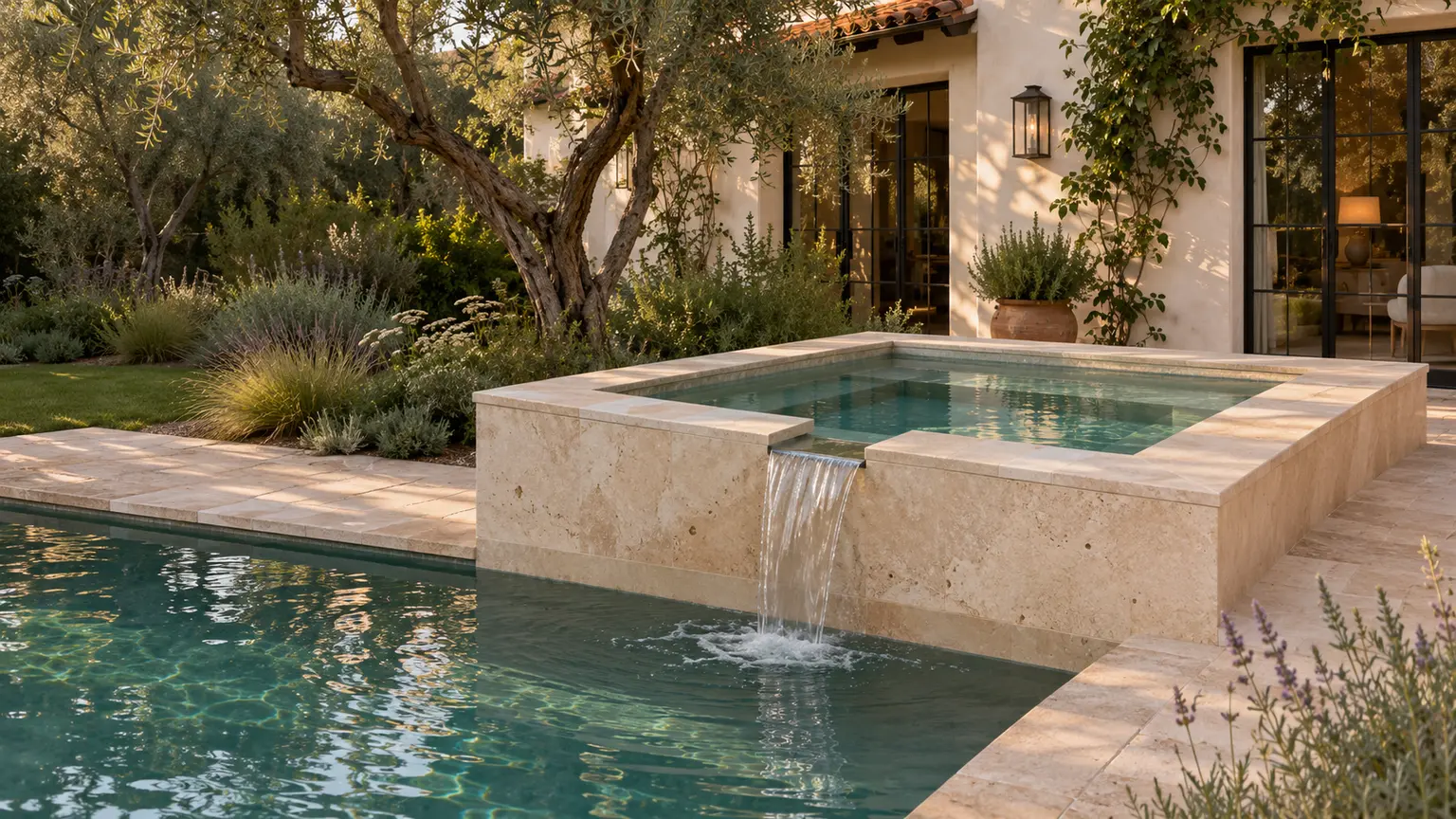
In the rendering, water falls from the raised spa into the pool. You imagine sitting in the warm water, listening to that same spillover after dinner.
Those two experiences may belong to different operating modes.
On some shared pool-and-spa systems, selecting spa mode stops the spillover. That can be normal operation, not a fault. The detail worth deciding before construction is whether the system you are buying can deliver the evening you pictured.
Our advice: ask for a demonstration of the proposed spa's complete use cycle before choosing it by its appearance. Start with the system in its ordinary idle state. Follow what happens when you want to soak, what changes while you are in, and what you need to do afterward.
A homeowner planning guide. Confirm the proposed equipment, controls and use arrangements with your designer and installer.
Watch the story
Loading the film connects to YouTube. Google’s privacy policy applies.
The waterfall and the warm soak are different jobs
A spillover is not simply decoration placed beside the spa. In a shared system, it can be part of the water's circulation route.
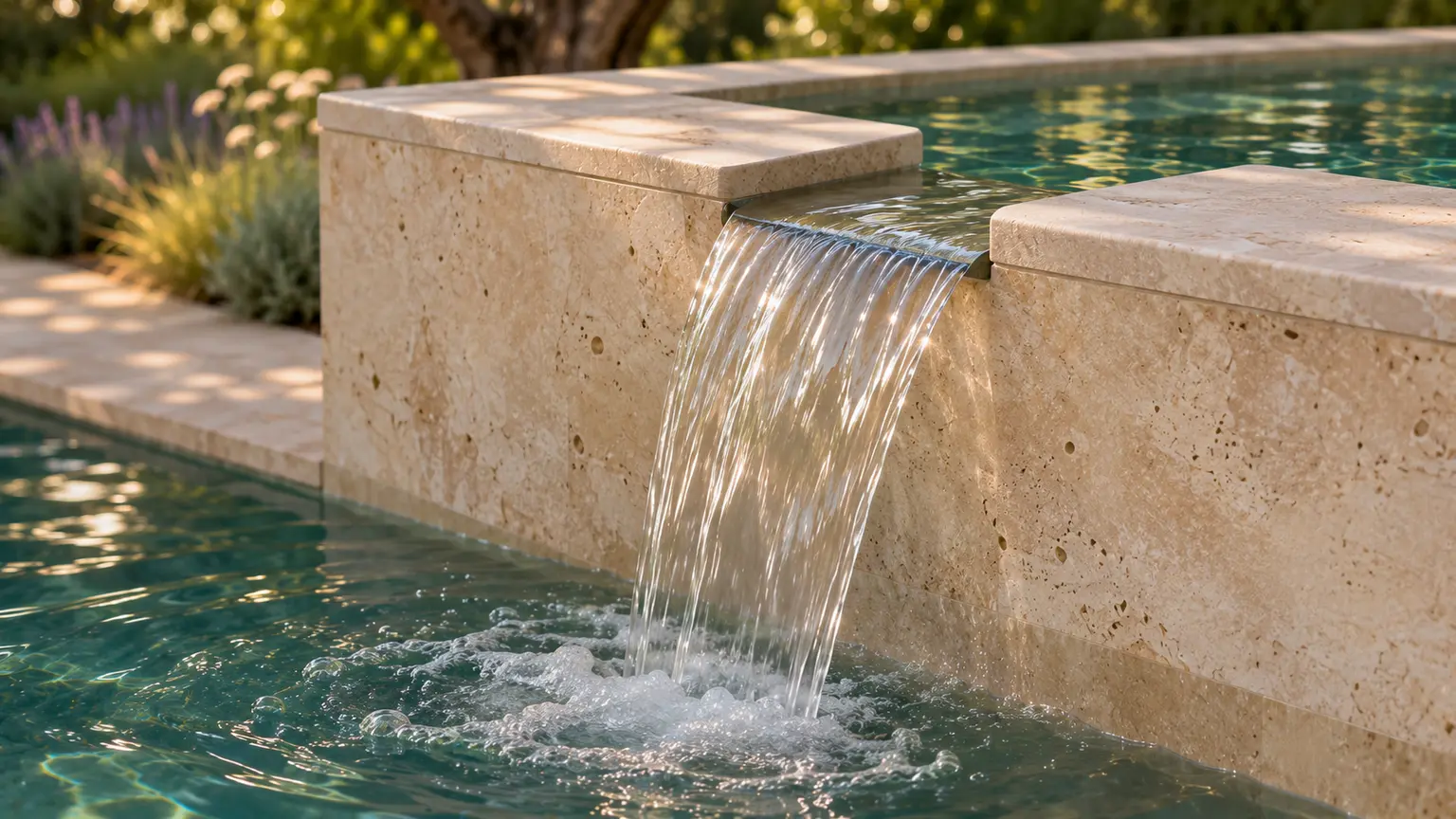
Pentair's IntelliCenter guide describes a spillway function that draws from the pool and returns water to the raised spa, where it falls back into the pool. It is a connected flow.
Jandy's AquaLink RS OneTouch manual describes a different state for its pool/spa combination models: spa mode switches circulation to the spa. Its glossary explains that the spillover is disabled while that mode is on. These are documented configurations, not a rule for every installation.
The design question follows directly: do you want to hear falling water while you soak, or do you mainly want to see it from the house? If simultaneous use matters, say so before the equipment and controls are specified. Ask the designer to explain how the proposed arrangement provides it, including any separate water feature or equipment being proposed.
The distinction is easy to miss in a beautiful still image. The water can look connected without telling you which functions can run together.
Planning reference: Pentair's IntelliCenter guide.
Planning reference: Jandy's AquaLink RS OneTouch manual.
Choose the operating arrangement, not just the silhouette
An attached spa and a separate hot tub make an obvious visual comparison. They do not, by themselves, describe everything about heating and control.
Pentair's guide distinguishes shared equipment from systems with separate equipment sets. Ask the team to identify the actual arrangement in your proposal: which water body each pump, filter and heater serves, and what changes when you select the spa. You do not need to design the plumbing. You need an explanation that matches the equipment being priced.
Try describing two occasions. On a weeknight, you decide you would like a soak after dinner. On Saturday, you know in advance that you will use the spa. Would you be content to plan ahead both times? Is ready access a priority you are willing to discuss the running cost of? Would losing the spillover sound change the experience for you?
Neither answer makes one style universally better. It tells the designer what must be true for your choice to work.
For the wider design conversation, read what to decide before choosing pool finishes.
Start the demonstration before the water is warm
A showroom demonstration that begins with warm water answers the comfort question. It does not answer how your own evening begins.
Ask the installer to walk through the proposed normal starting condition. Is the water maintained at a chosen temperature, heated for a scheduled session, or heated after a request? What would you do through the controls, and how would you know the spa is ready?
If a heat-up estimate is offered, ask for its assumptions: starting and target water temperatures, water volume, specified heater, weather conditions and cover use. Keep the estimate attached to those conditions. An impressive time from another installation is not a promise for yours.
Discuss running cost on that same basis. Ask what maintaining readiness would involve compared with your intended scheduled use, using the actual equipment and relevant energy rates. A purchase-price comparison cannot answer that on its own. Avoid accepting a single monthly figure with no explanation of usage.
Remote controls may make starting the process easier. They do not tell you how long that process takes. Have the team demonstrate the actual sequence, including the return to normal operation, rather than treating an app icon as the whole experience.
Include the cover in the design you approve
The uncovered spa is usually the image that sells the idea. The covered spa may be the view from your house for much of the day.
Ask to see the specified cover in place and in its stored position. Where does it go during a soak? Can the person who will normally use it manage the intended removal and replacement method? Does the storage position interrupt the route, the view or access needed for service?
PNNL's Building America guidance explains that covers can reduce evaporation and heat loss. Treat cover use as part of the proposed operating plan, not an accessory to decide after the paving is finished. Cover types serve different purposes; do not assume an insulating cover supplies the safety provisions required for your project.
This is also a reason to look beyond the glamorous view of a flush spa. Ask how the actual cover, access and equipment arrangement works in the finished setting.
Keep maintenance practical too. Our pool-equipment screening guide explains why access needs its own review.
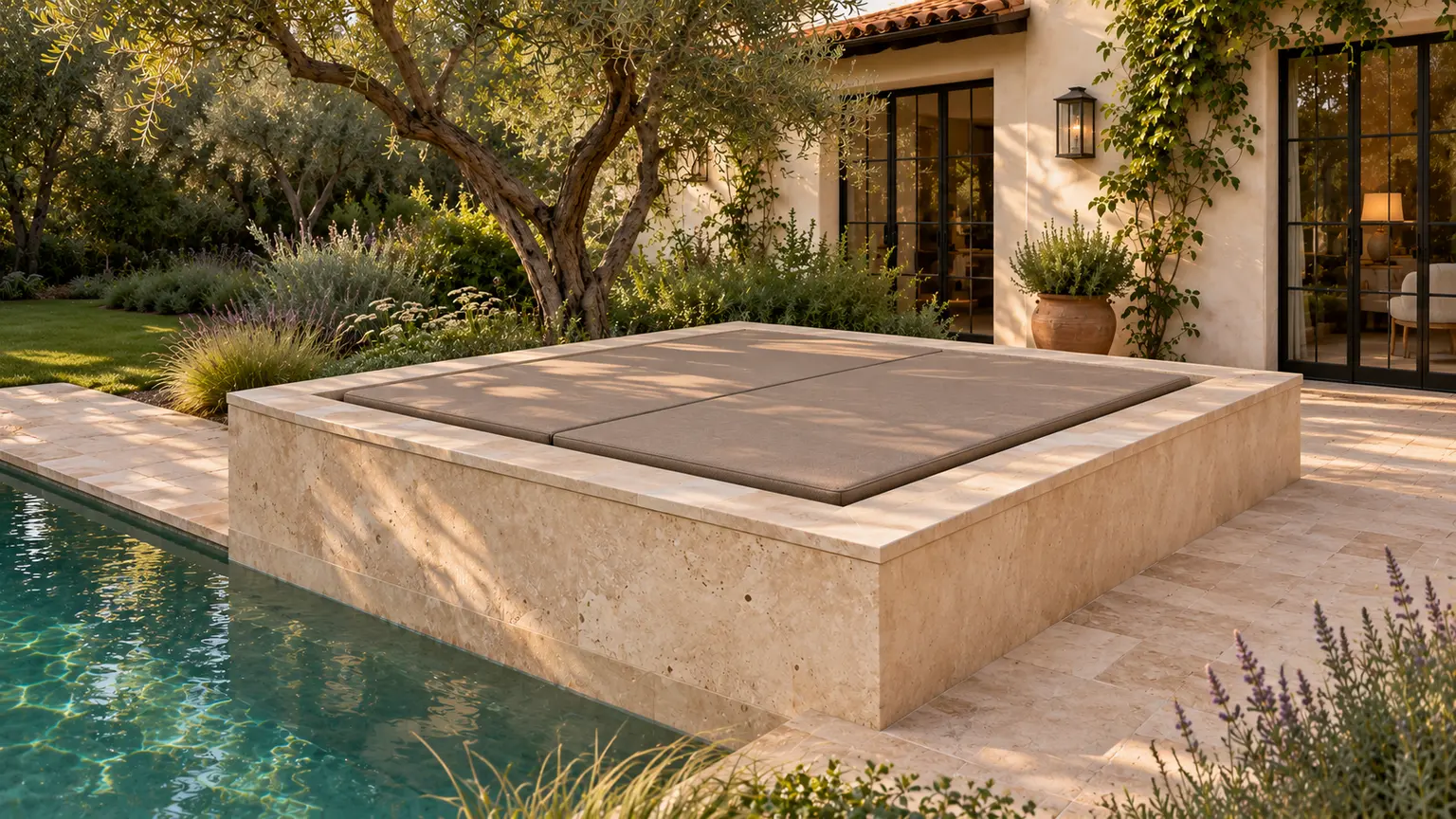
Planning reference: PNNL's Building America guidance.
Test the seat you will actually use
The plan may have room for several people while the seat you prefer still feels wrong to you. Jet count is not a substitute for trying the seating.
Where a dealer offers it, test the relevant model with water and jets operating under their guidance. Notice your position, the seat depth and whether you can sit comfortably where you intend to sit. Hot Spring recommends a dry or wet test for these reasons. It is a manufacturer's buying suggestion, not evidence that one brand or seating style will suit everyone.
For a custom spa that cannot be tried before it is built, ask the designer how the proposed seat, footwell, entry and jet positions will be reviewed with you. A visit to another installation can help you express preferences, but it does not establish the performance of a different design.
The useful comparison is the experience in the seat, with the functions you want running. It is not the number of features around it.
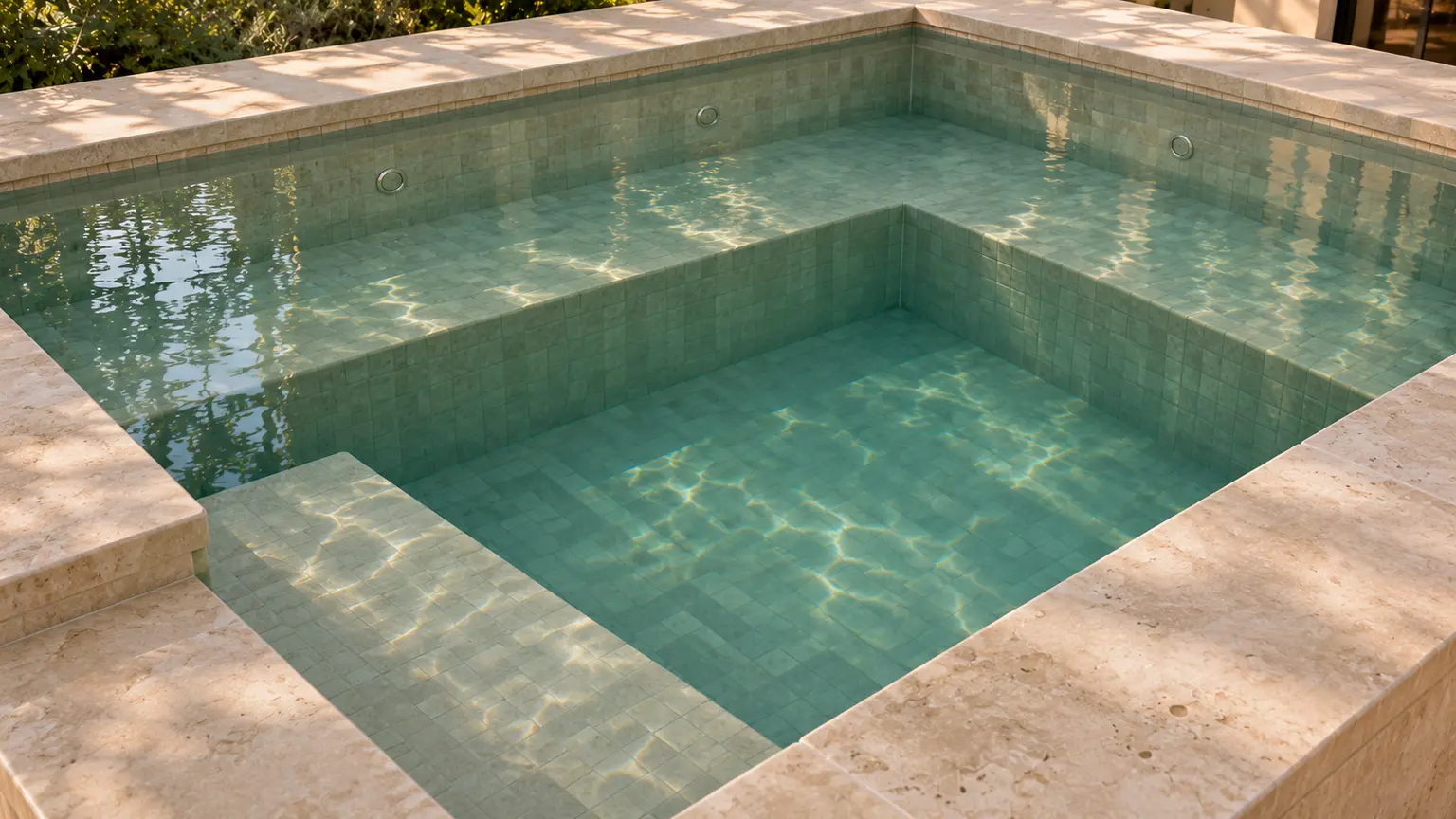
Planning reference: dry or wet test.
Request a soak rehearsal
Use this short brief with each proposal. Ask the team to fill the gaps rather than guess the answers yourself.
We want to use the spa for [spontaneous evenings / planned sessions / both]. Please walk us through its ordinary starting condition, the steps to prepare it, what runs during a soak, and how it returns to normal afterward. Explain whether the spillover or other water features can operate at the same time. Show the cover in use and stored, identify the proposed heating and control arrangement, and attach the assumptions to any heat-up or running-cost estimate. Include a demonstration and handover in the scope.
Keep a small record for each option: before you start; what you must do; what you wait for; what runs while you soak; what you put back. An unanswered item stays unanswered until the team resolves it.
Then return to the rendering. You may still choose the raised spillover spa. You may prefer a different operating arrangement, a separate feature for sound, or another type of spa altogether. The improvement is that you are choosing the experience as well as the view.
For broader scope and price context, see the pool renovation guide. The pictured spa is not a priced project.
Planning a pool or backyard project? Tell us what you want to change. Our team will discuss your project before arranging a contractor conversation.
 A little inspiration to take home.